Photo: Brandon Badraoui/IMSA
As another application period for the IMSA Diverse Driver Development (3D) Scholarship closes this week, four of its previous recipients have made waves as they build their careers deeper within IMSA’s paddock.
Inaugural recipient Jaden Conwright (2022) and subsequent recipients Courtney Crone (2023) and Celso Neto (2025-26) are all competing in IMSA-sanctioned series for the 2026 season, joined by this year’s recipient Nicky Hays (2026-27).
Conwright and Neto race head-to-head in the IMSA Michelin Pilot Challenge TCR class, with Hays stepping up into the series in its GS class. Crone, meanwhile, returns to the VP Racing SportsCar Challenge, this time in the GSX class following her path into F1 Academy where she raced with the Prema and ART teams as part of the Haas Driver Development Program.
Aspirants looking to join them as the potential 3D Scholarship recipient for 2027-28 have until this Friday to submit their application.
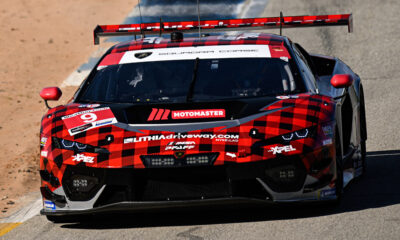
Conwright has become something of a sports car utility player, plying his trade in multiple IMSA series and classes. He started in the WeatherTech SportsCar Championship’s GTD class in an NTE Sport-run Lamborghini Huracán GT3 EVO and has since spent time in Lamborghini Super Trofeo North America and Pilot Challenge GS in a Toyota GR Supra GT4 EVO, and TCR in an Audi RS3 LM S TCR, respectively.
It was in 2025 that Conwright enjoyed a breakthrough run of results across TCR and Super Trofeo, including his first TCR victory at Virginia International Raceway – the first win for an IMSA 3D Scholarship driver.
He posted eight podium finishes in ten starts in Super Trofeo’s Pro class, but the TCR win sharing the No. 31 RVA Graphics by Speed Syndicate Motorsports Audi with Luke Rumberg was the standout result.
As Conwright explained, it came via a combination of letting the race come to him and pouncing when an opportunity presented itself.
“It was a case of run our race and then let it pan out over the long run because the big thing was tire deg was insane,” he said. “We had to be a bit aggressive, but we didn’t want to go too overkill as that would have not put us in a great spot at the end. We did our research, committed to the strategy and executed it perfectly.”
Neto was a frequent podium finisher in his first Pilot Challenge TCR season, banking three of them alongside series veteran Ryan Eversley, who spoke highly of Neto throughout the season. The duo finished fourth in points in the No. 7 Precision Racing LA Audi RS3 LMS TCR, with a best finish of second at Indianapolis.
This year, it’s an all-Brazilian team focus for Neto, now alongside countryman Raphael Reis in the Stallion Motorsports outfit, run in coordination with Gou Racing, in the No. 77 CUPRA Leon VZ TCR.
They started 2026 from pole in Daytona and will look to bank strong results to match from Sebring onwards.
“We’ve brought in different pieces from around the world,” Neto said. “There’s support from Cupra in Spain, support from the Gou family here in the U.S., engineers from Brazil, a few mechanics from Brazil, mechanics from the U.S. from IMSA and support from Baker Racing in Canada. So, I think we really merged different areas and what everyone really excels in, and hopefully building a dream team.”
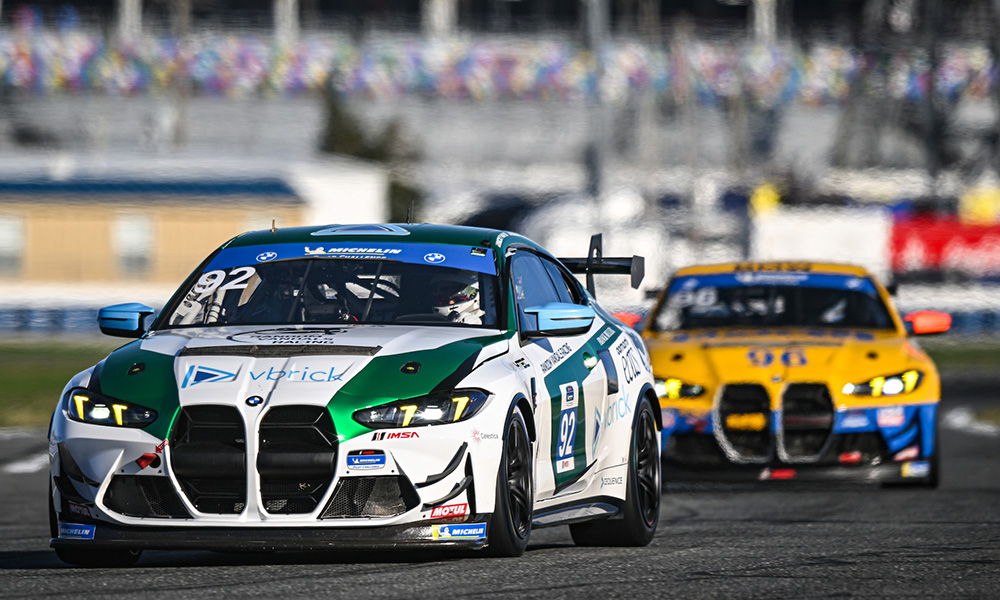
Crone makes her return to the IMSA paddock with CarBahn Motorsports with Peregrine Racing, running the No. 35 BMW M4 GT4 EVO in VP Racing Challenge.
She’s previously raced a LMP3 car in the series and said she needed to select an open-wheel or sports car-focused path for 2026, and landed on the perfect situation of BMW experts.
“I’ve known Jeff Westphal for a few years now and I knew when I made this jump to the GT4 car, really, it was CarBahn or nothing,” Crone said. “I really wanted to be a part of this team and just knowing that there’s a gentleman like Steve Dinan behind the car engineering it gives you a lot of confidence. I’m just really excited to be able to work with this team and get used to the family.”
All three have had fascinating career journeys to get where they’re at now, but they are unified in their understanding of how important the IMSA scholarship was to help.
“Winning the scholarship was special,” Conwright said. “It’s funny how my career has gone in reverse; I’ve always hovered around doing one-offs here and there when the opportunity arose. Now it’s coming around with hopefully full season for everything and then hopefully it just keeps building. Sports car racing is growing, and it’s great to be a part of.”
Neto added: “I think every year in general in motorsports is always a challenge to get things together in the right places. This (2026) deal honestly came about pretty late as well. But we made it happen after the success in 2025. I think motorsports is all about being at the right time with the right people. We had a good year last year that set us up for this year as well. I think hopefully, we’ll just continue to build for many years to come now.”
Crone had perhaps the best summation of what the scholarship has meant to her.
“Getting into VP Challenge to start with the LMP3 was really good for me, both for the consistency and being in the same vehicle,” she said. “I’d bounced around a lot between not only teams, but different cars. I was really happy to be able to race in the series and just to come back this year from the formula car that I raced last year, although I learned a lot from Haas in discovering the amazing workings of Formula 1.
“The IMSA scholarship was hugely beneficial, especially that first year. As you know, financial support is hard to come by and so just having that little extra boost from IMSA, not only on the financial side, but just being able to say that you’re the IMSA Diverse Driver Development Scholarship winner, is quite the thing on the resume to be able to use.
“So I’m just really thankful for IMSA. And I really credit winning that scholarship to a lot of the opportunities that I’ve gotten since then. So, yeah, I can’t thank IMSA enough for that opportunity and it’s something I’m always going to be proud to be able to say I won it.”




WeatherTech Championship
Pfaff Confirms Temerario GT3 Entry for Long Beach With Vanier

Nürburgring Endurance
BMW Expecting M3 Touring 24H to Fight With SP9 GT3 Cars


Porsche Sprint Challenge NA
Staut, Koch Shine in Barber Sprint Challenge Weekend

Mustang Cup USA
Buhl, Adams Score Victories in Capaldi Sweep at Barber


Nürburgring Endurance
Verstappen Mercedes-AMG Disqualified for Tire Rules Breach

WeatherTech Championship
Estre Accuses Nasr of Violating Porsche Penske Team Orders

WeatherTech Championship
No. 10 WTR Cadillac Loses Sebring Podium Finish

Nürburgring Endurance
Verstappen Wins NLS2 by One Minute on Mercedes-AMG Debut

Asian Le Mans Series
Porsche Projecting Possibility of “Two to Four” 963s for Asia

WeatherTech Championship
Watch the Full-Length Replay of 12H Sebring

Porsche Carrera Cup NA
Watch Full-Length Replays of Rounds 1 & 2 at Sebring

Lamborghini Super Trofeo NA
Watch Full-Length Replays of Rounds 1 & 2 at Sebring

Mustang Challenge NA
Watch Full-Length Replays of Rounds 1 & 2 at Sebring

Porsche Carrera Cup NA
Inside the Germany to Sebring Journey for Porsche 911 Cup