Image: Toyota
Toyota Racing has confirmed that it has utilized a single Evo joker for its upgraded TR010 Hybrid for the new FIA World Endurance Championship season.
The technical director of the recently-renamed Cologne organization previously known as Toyota Gazoo Racing Europe, David Floury, made the clarification speaking to reporters about the major aerodynamic overhaul to the marque’s GR010 Hybrid.
It’s understood to mark the first Evo joker usage made by Toyota since its 2023 update, with the GR010 having been largely unchanged in the following two seasons.
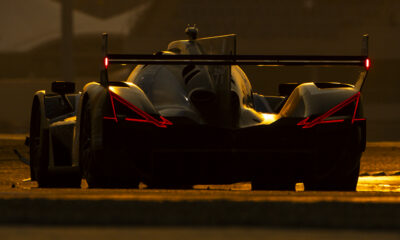
The change to the TR010 is however by far the most significant aerodynamic update made to the car since its 2021 debut, also bringing the visual identity of Toyota’s Hypercar challenger much closer in line with its road car designs.
“We wanted to address a few small issues we had seen with this package and generally make the car easier to drive and more consistent in all conditions,” said Floury.
“And the second target, was to integrate much more styling identity, so that the car is representing the brand’s image more accurately and stronger.”
Floury stated that addressing the GR010 Hybrid’s top speed weakness in last year’s 24 Hours of Le Mans was another focus of the update, which features heavily revised front bodywork as well as new sidepods and a restyled rear wing.
“It’s a sum of things you want to achieve and obviously it’s a difficult exercise,” he said. “Top speed is one of the factors, but we have to enter a tight aero window.”
“The scope to increase top speed by reducing drag is limited by the regulations, so the scope is very little. The top speed differences we have seen in Le Mans, the source can be found in different reasons, not all of them being under our control.
“So, we try to obviously work on what is under our control.”
While the revised aero package was the major focus of the update, Floury said other changes were made under the skin that did not require an Evo joker.
“We have made some small updates, but which are more linked to reliability than anything else,” he clarified.
“Obviously, we have had a couple of small things during last year, the biggest one being losing a wheel in Le Mans, and these points we need to address.”
Bringing Update in 2025 Would Have Been “Too Big a Compromise”
As previously reported, Toyota had initially planned its aero update for the 2025 season, but ultimately elected to shift it back a year, in part due to the Sauber wind tunnel in Hinwil, Switzerland no longer being available to the FIA for homologation.
Going into more depth about that decision, Floury acknowledged that it “would have been good” to have the update last year considering its difficult season, but said that the time frame to get the car homologated prior to the FIA’s switch to the Windshear wind tunnel also used by IMSA at the end of 2024 was simply too tight.
“The decision to do the aero update was taken in the course of 2024 to try and keep up with the development pace,” said Floury.
“We were initially targeting the introduction for the 2025 season, but due to the wind tunnel change from Sauber to Windshear, we could not achieve 2025, because our plan was to go in the wind tunnel to homologate the car in the first part of the very first month of 2025, and this was a very tight schedule already.
“Due to the change in wind tunnel, all the 2025 cars had to be homologated at Sauber before December, which was impossible to achieve, or would have led to too big a compromise, both in terms of performance, styling and quality of what we were doing.
“So we decided to push it to 2026 and have more time to go into the details.”
Floury also highlighted the input that Toyota’s styling department had on the update, admitting that not every suggestion coming from Japan could be integrated into the final homologation design due to aerodynamic considerations.
“Our first [Hypercar] didn’t integrate any strong styling identity, and once we decided to do an upgrade, one of the key targets was that the car should have a much stronger Toyota identity,” he said.
“At the end of the day this was quite well achieved thanks to the work of the styling department back in Japan at TMC.
“I think the car looks quite cool compared to the previous version.
“It’s a compromise: some of the styling cues [suggested] were too penalizing in terms of aero so we couldn’t use them, and some of the aero solutions were too compromising in terms of styling, so you have to find the right balance between the two.”



Intercontinental GT Challenge
Watch the Full-Length Replay of Bathurst 12H

WeatherTech Championship
IMSA, Laguna Seca Planning ‘Throwback’ Weekend

VP Racing SportsCar Challenge
IMSA Delays Launch of BMW M2 Racing Class to COTA

Intercontinental GT Challenge
Bathurst Post-Race Notebook

Intercontinental GT Challenge
Sims: “Win Was On” For JMR Corvette in Bathurst Debut

Intercontinental GT Challenge
Boccolacci Admits Disbelief at High Class’ P2 Overall Finish

Porsche Carrera Cup NA
New Porsche 911 Cup Cars Arrive in U.S.

Intercontinental GT Challenge
Ford “Well Prepared” for Mustang GT3 Bathurst Debut

European Le Mans Series
Genesis Signs New Recruits to Trajectory Program


Asian Le Mans Series
Title Shakeup as LMP3 Winner Disqualified
Intercontinental GT Challenge
Watch the Full-Length Replay of Bathurst 12H

Intercontinental GT Challenge
Watch Bathurst 12H Highlights

Intercontinental GT Challenge
Watch Bathurst Qualifying, Pole Battle Highlights