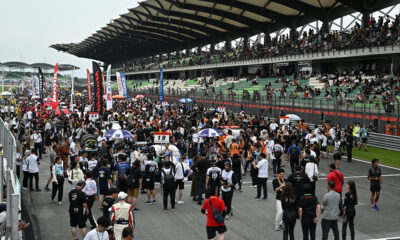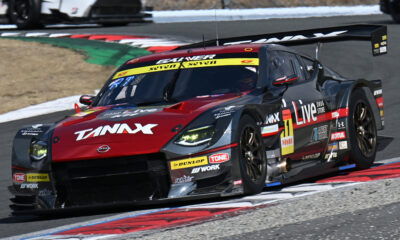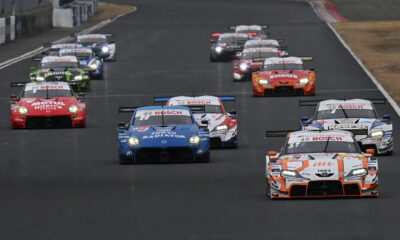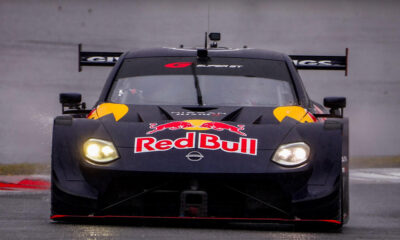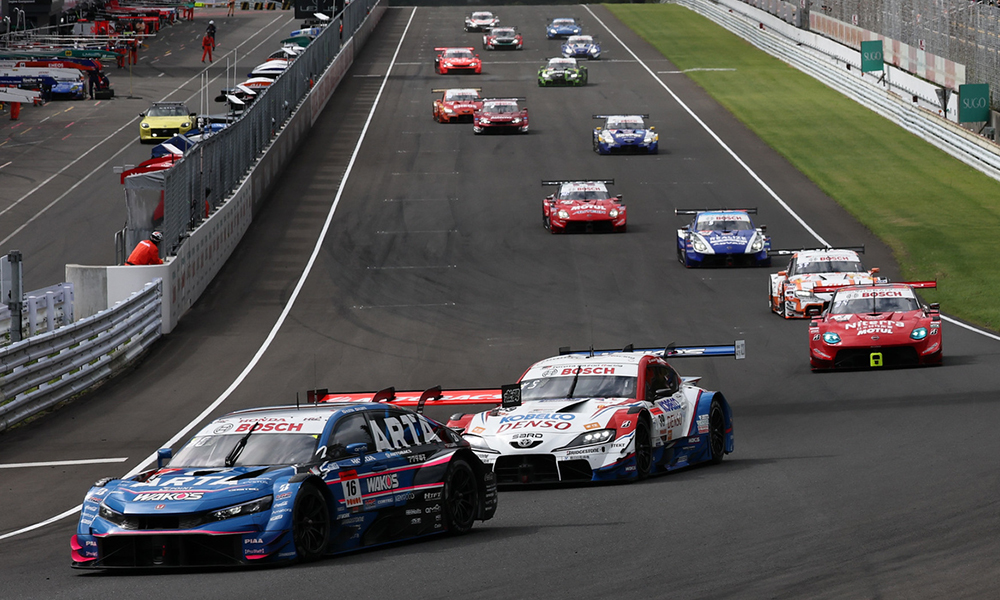
Photo: SUPER GT
SUPER GT’s GT500 technical regulations are to be extended through 2029, with the GTA revealing plans to implement a four-year aero freeze starting next season.
Last weekend at Sugo, GTA chairman Masaaki Bandoh stated aero development is to be frozen from 2026 until the end of the 2029 season in the name of cost saving, meaning the introduction of new GT500 cars is pushed back to 2030 at the earliest.
The current aero freeze is set to lift this winter, meaning Toyota, Honda and Nissan will all be able to freely develop the bodywork that sits below the so-called ‘design line’ until the specs are homologated following the end of pre-season testing in March.
However, a spokesperson for the GTA clarified that manufacturers will still be allowed to introduce entirely new base models during this period, and limited changes will be granted to all manufacturers for any years in which new models appear.
Honda is widely expected to replace the current Civic Type R-GT with an all new model based on the recently-launched Prelude sports coupe next year.
Toyota is also rumored to be considering a replacement for the GR Supra, with the road-going equivalent soon to go out of production, although it currently appears that there won’t be a successor to the Supra until 2027 at the earliest.
The fundamentals of the current GT500 cars have remained unchanged since the full implementation of Class One rules in 2020, with what had initially been expected to be a three-year cycle extended to five years amid the COVID-19 pandemic.
While a new rules cycle began this year as every team was supplied with a fresh spec monocoque, there were no major changes to the regulations themselves.
The current rules will now be in place until at least 2029, as the timeline for the introduction of all-new cars — initially slated for 2028 — has drifted amid a lack of consensus between the GTA and the manufacturers on the direction to take.
While the GTA spokesperson stressed that this doesn’t mean that new regulations will necessarily be introduced in 2030, Bandoh has expressed a desire to finalize a direction in time to begin simulation and prototyping work for the new rules in 2027.
At Sugo, he also mentioned the prospect of a collaboration with DTM organizer ADAC, with the series having previously worked with the German championship’s former promoter ITR on the Class One rules that form the basis of the current GT500s.
As well as the aero freeze, Bandoh also reiterated a desire to go through with plans for GT500 teams to cut down from two engines per season to one as early as next year.
However, this remains subject to the agreement of Toyota, Honda and Nissan, with the GTA spokesperson clarifying that “the timing of the introduction of [the one-engine rule] will be finalized in future discussions with all three manufacturers.”
It comes despite several teams being forced forced into premature engine changes this year due to problems arising from the use of carbon-neutral fuel, which has led to suggestions that teams will be able to use a third engine without penalty.
The GTA’s contract with fuel supplier Haltermann Carless expires at the end of next year amid suggestions that the series could switch to a domestic supplier in 2027.



WeatherTech Championship
Honda Olympic Athletes to Serve as Long Beach Grand Marshals

European Le Mans Series
Hughes Ends Prologue Fastest, Koen Tops Day 2

Lamborghini Super Trofeo Europe
30 Entries for Paul Ricard Season Kickoff


GT World Challenge Europe
Van der Linde ‘Motivated to Push’ for Back-to-Back Titles

GT World Challenge America
Watch SRO America’s Sonoma Postcard

GT World Challenge Europe
Stroll to Make Surprise GT3 Debut in Paul Ricard Opener


European Le Mans Series
Proton to Run Porsche Tribute Livery on No. 75 LMGT3 Entry

WeatherTech Championship
Pfaff Confirms Temerario GT3 Entry for Long Beach With Vanier

WeatherTech Championship
Sebring Delivers All-Time 115,000 Attendance Record
GT World Challenge America
Watch SRO America’s Sonoma Postcard

WeatherTech Championship
IMSA Endurance Hour Podcast: Ep. 29: Hawksworth & Gonzalez

Toyota GR Cup NA
Watch Full-Length Replays of Rounds 3 & 4 at Sonoma

McLaren Trophy America
Watch Full-Length Replays of Rounds 1 & 2 at Sonoma