Photo: Julien Delfosse/DPPI
Sportscar365’s staff is recognizing the top performers and moments from the 2025 sports car racing season. In the final article of the series, we look back on the year’s best drivers in the form of a top ten list looking at all categories, prototype and GT, together, along with highlighting the best Bronze-rated driver from the year.
Honorable Mentions:
***Robert Noaker made IMSA history in becoming the first driver in the modern era to complete a ‘perfect’ season by claiming all 12 wins, pole positions and fastest race laps in the Dark Horse class of Mustang Challenge. The Robert Noaker Racing owner/driver therefore ended up with the maximum-available 4,440 points, finishing a whopping 1,390 ahead of second placed Devin Anderson. Noaker’s only defeat in Mustang Dark Horse R this year came in the pair of non-points paying Le Mans Invitational rounds, where he finished seventh after a technical infraction relegated him to the rear of the starting grids in both races.
***Charles Milesi enjoyed another strong season with Alpine in the FIA World Endurance Championship that peaked when he delivered the French brand its first win with its A424 LMDh car at Fuji, hanging on in the closing stages on older tires against the Peugeot of Mikkel Jensen. The diminutive 24-year-old was also a key contributor to VDS Panis Racing’s championship run in the European Le Mans Series alongside Esteban Masson and Oliver Gray, closing out victories at Imola, Spa and Portimao in unflustered style.
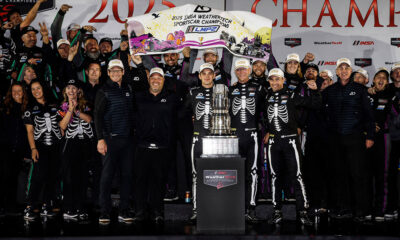
***Dane Cameron enjoyed another highly successful season in LMP2 competition with AO Racing, earning titles in both the IMSA WeatherTech SportsCar Championship (his fifth across all classes in that series) and the ELMS together with PJ Hyett. Joined by Louis Deletraz, Cameron and Hyett were on the class podium in all bar one ELMS race, with the same trio also capturing LMP2 Pro-Am honors in the 24 Hours of Le Mans while also finishing third of the LMP2s overall. The American’s real calling card was consistency — on 75 lap averages at Le Mans, there was nothing to choose between he and Deletraz.
***Nick Tandy already won our ‘Moment of the Year’ award for his victory in the Rolex 24 at Daytona, which cemented his legacy as ‘Mr. 24 Hours’ as he completed the unofficial grand slam after previous twice-around-the-clock success at Le Mans, the Nürburgring and Spa. That kicked off a run of three WeatherTech Championship wins alongside Porsche Penske Motorsport co-driver Felipe Nasr, although a crash in the Sahlen’s Six Hours Watkins Glen marked the start of their championship charge unravelling.
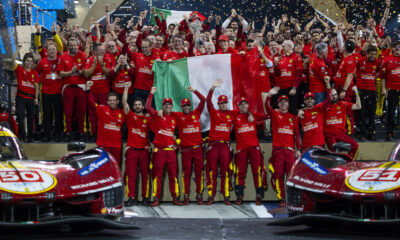
***Antonio Fuoco may not have been the absolute standout Ferrari Hypercar driver in the way he had been previously, but 2025 was still another accomplished campaign. Without contact with Sebastien Buemi at Imola that dealt the No. 50 Ferrari 499P a costly puncture and the loss of vital points with a disqualification at Le Mans, it could have quite easily been Fuoco, Nicklas Nielsen and Miguel Molina celebrating the title instead of the No. 51 crew. Plus, Fuoco was absolutely in a class of one on the streets of Macau as he delivered Ferrari its maiden FIA GT World Cup at Macau.
***Alessandro Pier Guidi was part of the No. 51 Ferrari crew that ended up hoisting the world championship trophy in Bahrain, and while there were some errors, including a spin on the way into the pits at Le Mans and contact with Nico Varrone at Fuji, the Italian veteran also deserves credit for his charge to the win at Spa ahead of the sister No. 50 Ferrari, and can be considered unlucky not to take a victory in the wet at COTA, where contact with Kevin Estre left him with a puncture, to add to wins at Imola and Spa.
Best Bronze Driver: PJ Hyett
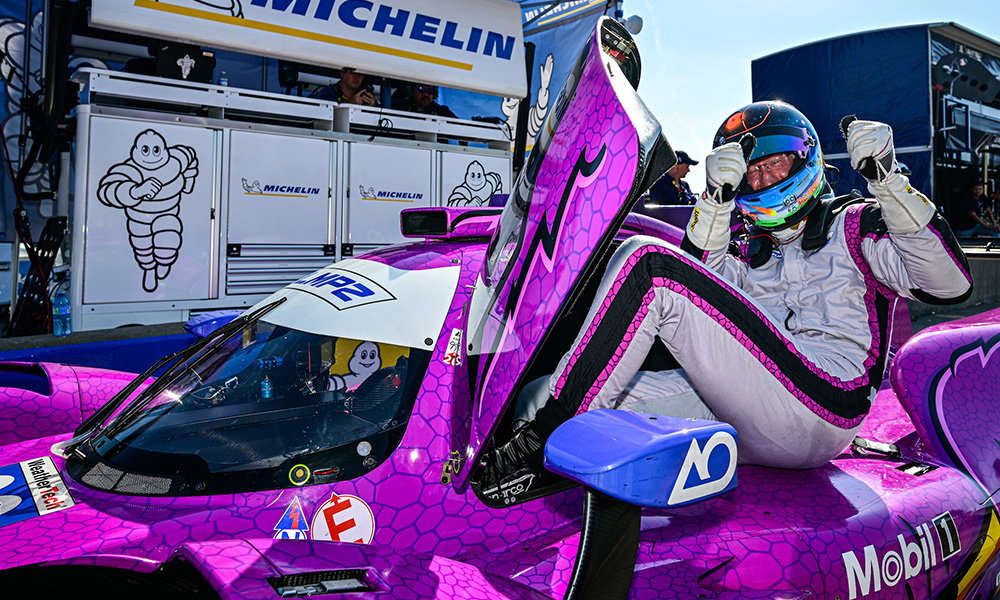
Photo: Brandon Badraoui/IMSA
While showing impressive pace but lacking consistency, PJ Hyett’s first season in LMP2 machinery left something to be desired. However, the AO Racing owner/driver showed remarkable progress, enough to set the benchmark amongst Bronze-rated drivers in global prototype racing this year. The 42-year-old, who only started professional racing in 2022, claimed a breakthrough LMP2 Pro-Am class victory at Le Mans alongside Cameron and Deletraz, while also winning both the WeatherTech Championship and ELMS class titles in Oreca 07 Gibson machinery.
Hyett’s Le Mans victory was remarkably his first-ever in the pro ranks and kick-started a four-race consecutive win streak for he and Cameron, which included the ELMS round at Imola and WeatherTech Championship races at Canadian Tire Motorsport Park (overall) and Road America. While pitted up against the likes of LMP2 veterans Steven Thomas, George Kurtz and even Ben Keating at the Rolex 24, Hyett set an even higher bar for gentlemen drivers, not only domestically but in European competition as well.
10. Jordan Pepper
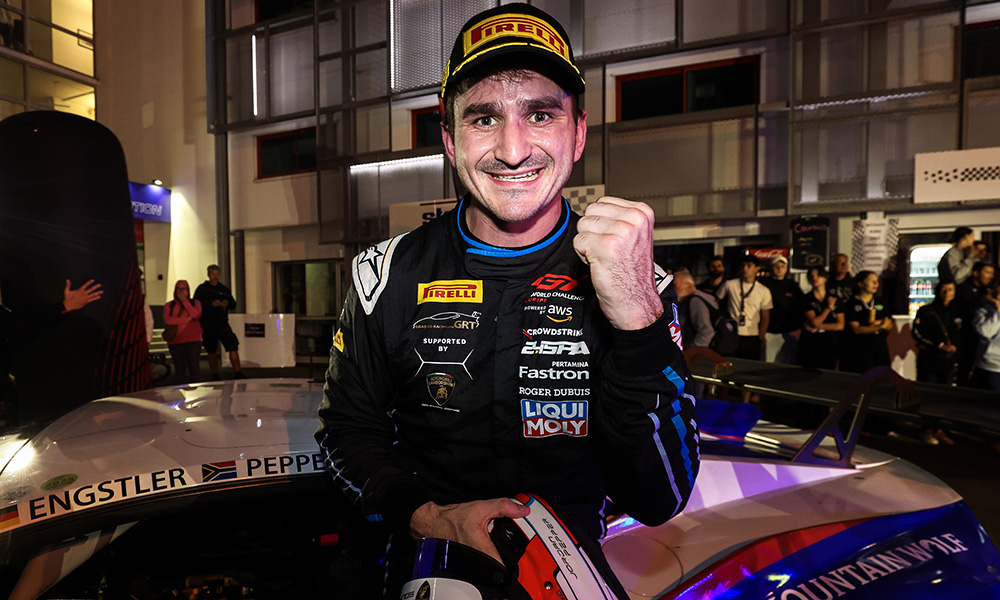
Photo: JEP/SRO
Jordan Pepper’s final season as a Lamborghini factory driver did not exactly get off to the most brilliant of starts, getting eliminated in a multi-car accident in the seventh hour of January’s Rolex 24 at Daytona. From there, however, the South African bounced back to put together a campaign that solidified him as Sant’Agata Bolognese’s most dependable performer – although one that is set to move to BMW in 2026.
While his victory in the CrowdStrike 24 Hours of Spa alongside Mirko Bortolotti and Luca Engstler was undeniably the peak of his year, Pepper’s strong record across every championship he competed in sets him apart from his colleagues. The 29-year-old proved himself capable of producing wicked qualifying pace when required, and then backing it up with strong race performances. His maiden DTM victory at the Norisring – just a week after his Spa triumph – was proof of this, controlling the field in a lights-to-flag performance starting from pole position.
It was a similar story for Pepper in GT World Challenge Europe powered by AWS Sprint Cup, with standout moments like his last-gasp pole position for the title decider at Valencia and fight back to victory at Magny-Cours, passing Rutronik Racing’s Sven Mueller after GRT Grasser Racing Team had lost the lead in the pits.
9. Alex Lynn

Photo: Julien Delfosse/DPPI
No one car managed a perfect set of top ten qualifying appearances in the WEC this year, but the one that came closest was the No. 12 Hertz Team JOTA Cadillac. That was pretty much entirely down to the exceptional one-lap speed of Lynn, who took pole positions at Le Mans, Sao Paulo and Fuji. And while his Hyperpole 2 effort to beat Cadillac stablemate Earl Bamber at the Circuit de la Sarthe was the one that will live longest in the memory, his run to the top spot at Fuji, where he hammered Bamber by 0.439 seconds around a lap lasting just under 90 seconds, was arguably even more impressive.
At Le Mans, Lynn emerged as quickest of the Cadillac drivers, narrowly shading local hero Sebastien Bourdais, and it was his stint in Sao Paulo that allowed the No. 12 crew to get back on top of the sister No. 38 machine after an early penalty to seal the marque’s long-awaited first WEC win. Lynn was equally sensational in the mixed conditions at COTA, where an ill-fated call to bring both Caddys in for wet tires in first qualifying led to the No. 12’s only pre-Hyperpole elimination of the year, and another heroic qualifying effort in the Bahrain finale, where the V-Series.R had a much less favorable Balance of Performance than it had in the races prior, set up a strong run to sixth for he and co-drivers Will Stevens and Norman Nato, best of the rest behind Toyota and Ferrari.
Regrettably, we didn’t get to see Lynn outside the WEC this year after he missed the Rolex 24 at Daytona, which he was due to contest with Wayne Taylor Racing, due to illness and did not return for either of his remaining Michelin Endurance Cup appointments. Given the Briton’s speed for JOTA, you have to say that was WTR’s loss.
8. Philip Ellis
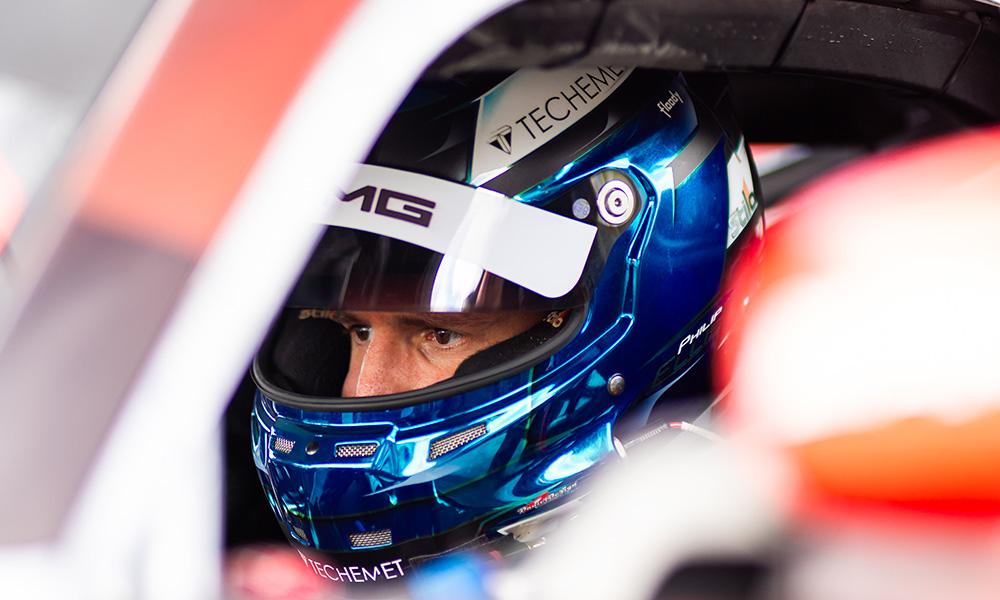
Photo: Fabian Lagunas/SRO
The Mercedes-AMG factory driver had another memorable year, particularly in North America, which saw Ellis and co-driver Russell Ward claim back-to-back IMSA WeatherTech SportsCar Championship GTD titles with Winward Racing. It came in another highly competitive season that brought class wins at the Mobil 1 Twelve Hours of Sebring, WeatherTech Raceway Laguna Seca and Virginia International Raceway.
While not as dominant as their 2024 campaign, where he and Ward took class victories in three of the five Michelin Endurance Cup races, including the Rolex 24 at Daytona, Ellis continued to show his fine form of excellence in what’s considered one of the most hotly contested GT3 championships in the world.
Ellis was also again the benchmark driver in GT World Challenge America powered by AWS, taking five overall poles in seven races, as well as three Pro-Am class wins alongside Bronze-rated driver Jeff Burton in Regulator Racing’s Mercedes-AMG GT3 Evo. The team again effectively played its reverse driver strategy nearly to perfection, a loophole in the rules that has been erased for 2026. Ellis and Burton ended the GTWC America season third in the class championship after challenging weekends at VIR and Barber Motorsports Park.
7. Matt Campbell/Mathieu Jaminet
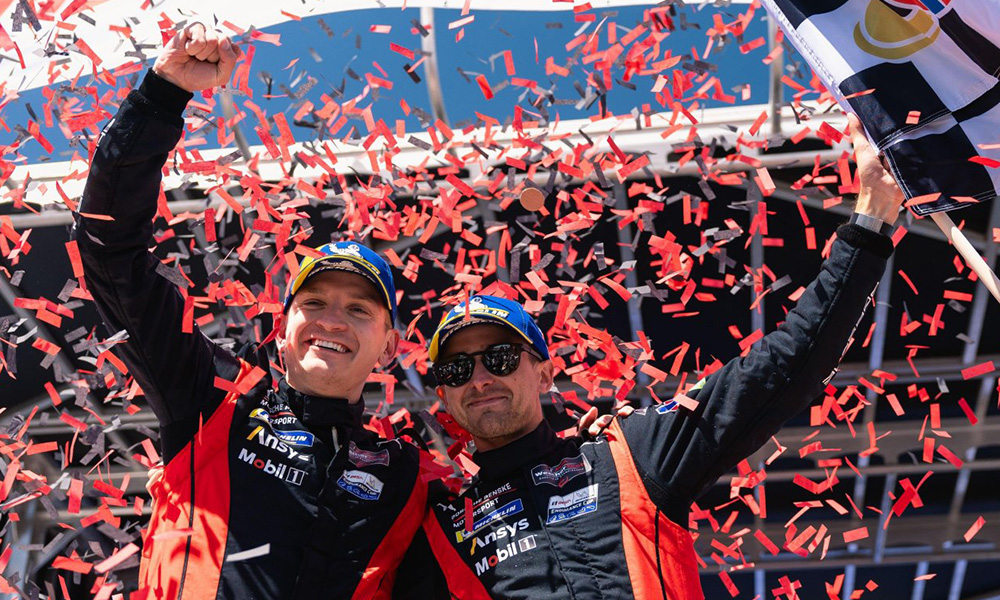
Photo: Jordan Lenssen/Porsche
For the first time since their run to the WeatherTech Championship GTD Pro title in 2022, ‘Cam-Jam’ were reunited this year, duly delivering Porsche another GTP drivers’ crown. Given that the pair shared the title-winning No. 7 Porsche 963 and were just about equally potent as each other on their forays into the WEC as third drivers, we decided to give Campbell and Jaminet joint billing in our ranking this year.
For both Porsche GTP crews, the season was one of two halves thanks to the Balance of Performance adjustments made in the wake of the Weissach marque’s 1-2 at WeatherTech Raceway Laguna Seca, where Campbell and Jaminet scored what would prove to be their only win of the year. But while things pretty much fell apart for Nick Tandy and Felipe Nasr from that point on, Campbell and Jaminet remained reliable scorers even when the 963 wasn’t at its best, adding two more podiums at Detroit, where Jaminet passed Nasr after a late caution, and in the finale at Michelin Raceway Road Atlanta to seal an ultimate comfortable title.
When the pair weren’t sharing the same car, as was the case in the WEC, Campbell scored a win at the Circuit of The Americas together with Kevin Estre and Laurens Vanthoor as well as a runner-up finish at Le Mans, trumping Jaminet’s best finish of fourth at Fuji. But, on the other hand, Jaminet was just a fraction slower than the best of the No. 5 drivers, Julien Andlauer, at La Sarthe, where Campbell was some way behind Estre, and far ahead of Michael Christensen. In fact, it was a performance that may have influenced the later decision to call back Jaminet for Fuji at the expense of Christensen.
Considering Campbell and Jaminet’s 75-lap averages at Le Mans were split by a mere 0.007 seconds, it’s fair to call it a draw — hence the joint ranking.
6. Kenton Koch
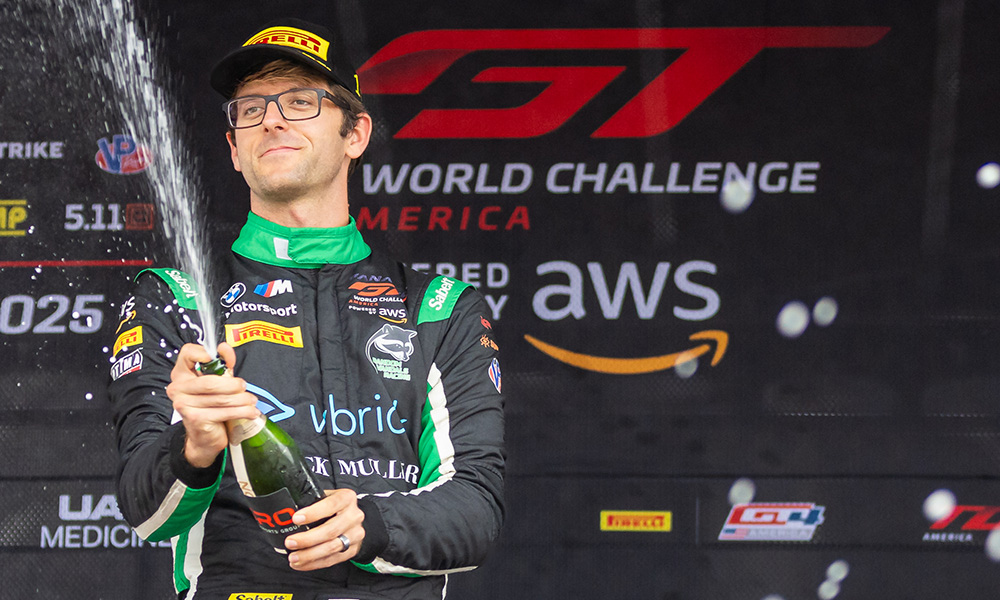
Photo: Fabian Lagunas/SRO
It’s not often a driver pulls off championship titles in two series in the same year, but that wasn’t even the full story of Kenton Koch’s remarkable season. The 31-year-old, who took GTWC America Pro and Pirelli GT4 America Silver class titles, endured a mid-season team switch in the WeatherTech Championship to finish second in the GTD class standings, showcasing his talent behind the wheel of three different GT3 cars (Mercedes-AMG GT3 Evo, BMW M4 GT3 EVO and Ferrari 296 GT3) and the BMW M4 GT4 EVO over a diverse and busy year.
Koch’s GTD season started with in Korthoff Competition Motors’ Mercedes-AMG, highlighted by a third place class finish at the Sahlen’s Six Hours of The Glen, which ended up being the team’s final race. Koch made the rapid switch to Ferrari outfit Triarsi Competizione, where along with team owner/driver Onofrio Triarsi, gave the team its first-ever WeatherTech Championship victory at Road America, remarkably as a Silver/Bronze pairing, and backed it up with second place finishes at VIR and the season-ending Motul Petit Le Mans, the latter race with a sprained left ankle that forced him to revert to right-foot braking.
His year wasn’t over at Michelin Raceway Road Atlanta, however, as Koch and Random Vandals Racing co-driver Kevin Boehm sealed the GT4 America Silver championship by starting the first race of the weekend at Indianapolis Motor Speedway, in a season that saw the duo claim seven class wins out of 13 races. He then teamed with BMW factory driver Connor De Phillippi and IndyCar ace Conor Daly to score maximum GTWC America Pro class points in the Indianapolis 8 Hour presented by AWS in Random Vandals’ BMW, also taking seven class wins along the way.
With Koch being upgraded to FIA Gold driver rating as a result of his incredible success, it would be difficult for him to repeat what could be considered a history making year in 2025 for one the most versatile GT drivers in the business.
5. Kevin Estre
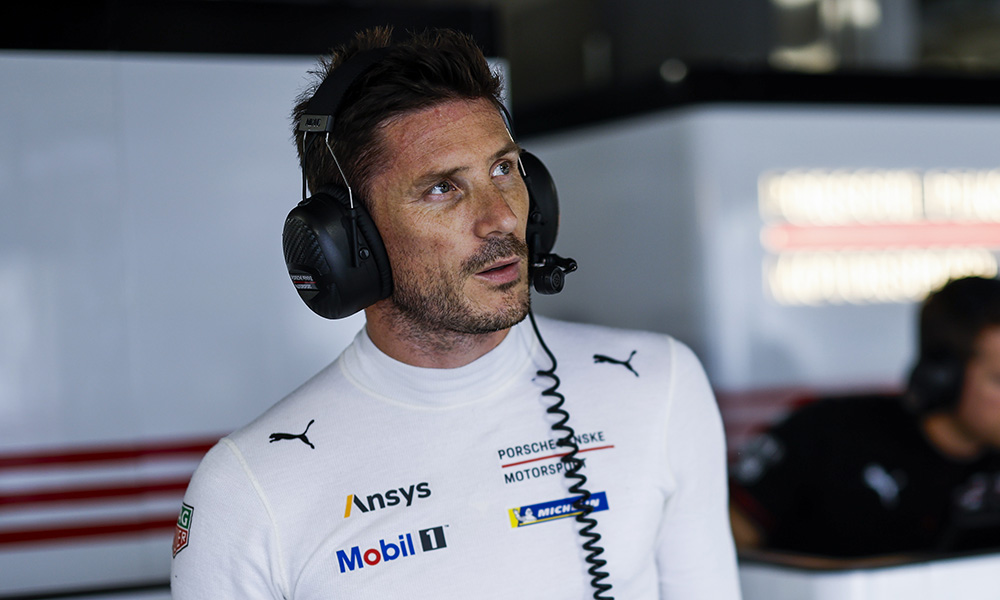
Photo: Julien Delfosse/DPPI
A brief glance at this year’s WEC results clearly shows that the Porsche 963 was not quite the formidable weapon this season that it had been in 2024, when Estre, Laurens Vanthoor and Andre Lotterer won the championship. But that reality did not prevent Estre from emerging as one of the year’s star drivers once again, and even if a few mistakes were made along the way, the Frenchman was always entertaining to watch.
The 24 Hours of Le Mans was the first race of the year where Porsche was really in the game, and Estre was head and shoulders above his peers within the three-car Porsche Penske Motorsport squad. On 75-lap averages, he was four tenths up on the next-fastest member of the stable, Julien Andlauer, and the quickest driver without the blessing of a Ferrari 499P at his disposal. In the wet at the Circuit of The Americas, his virtuosity was on full display as he pulled away after caution not once but twice, while a penalty at Fuji for a pit stop infringement prevented Estre from challenging for victory.
High-profile errors in qualifying at Fuji and Bahrain mean Estre isn’t ranked as high as he might have been, but on reflection it felt like neither of these made the difference in Porsche’s championship battle against Ferrari, particularly as the Balance of Performance pendulum swung firmly against Porsche for the Bahrain title-decider.
Outside of the WEC, Estre helped Porsche Penske’s WeatherTech Championship squad to a pair of podium finishes in the Rolex 24 at Daytona and Mobil 1 Twelve Hours of Sebring, and was twice a podium finisher in the Intercontinental GT Challenge at the wheel of a 911 GT3 R, with only a penalty for unfortunate contact with a GT4 car separating he and his Manthey EMA co-drivers from victory in the Nürburgring 24. Pole for the Eifel classic was another reminder of Estre’s incredible one-lap speed that will serve him well upon his move to full-time WeatherTech Championship competition next year.
4. Antonio Giovinazzi

Photo: Julien Delfosse/DPPI
It would be fair to say that Giovinazzi’s 2025 WEC season did not get off to the most auspicious of starts, as he earned, not one, not two, but three penalties during the season-opening Qatar 1812km. Luckily for the Italian, on a day that Ferrari was utterly dominant, it didn’t end up proving too costly, as he and his co-drivers in the No. 51 car Alessandro Pier Guidi and James Calado still came away with third place. And after that, besides being one of many drivers to be penalized for pit lane speeding at Le Mans, Giovinazzi barely put a wheel wrong the rest of the year.
Strong stints at both Imola and Spa, where the No. 51 crew won back-to-back races to ignite their title charge, were followed by a star turn at Le Mans. Using a 75-lap sample, Giovinazzi was second only to Robert Kubica at La Sarthe, narrowly edging out Nicklas Nielsen and Antonio Fuoco from the sister No. 50 car, and was comfortably clear of both Pier Guidi and Calado (albeit with a diminishing margin the larger the sample). The ex-Formula 1 driver further solidified his status as the standout member of the No. 51 crew with fantastic drives at both Fuji — where he was singled out for special praise post-race by Ferrari’s head of race and test operations Giuliano Salvi — and Bahrain, where he briefly split the all-conquering Toyotas before thoughts turned to securing the title.
Although Giovinazzi has had his fair share of highlights since the beginning of the Ferrari Hypercar program, 2025 felt like the season he truly came of age, stepping out of the shadows of his more experienced (in WEC terms at least) co-drivers and fulfilling the massive potential he showed early in his career before an ultimately forgettable three-season spell in Formula 1 for Sauber. At the age of 32, you sense there are still plenty of WEC wins, and perhaps titles, to come in the future.
3. Robert Kubica (Prototype Driver of the Year)
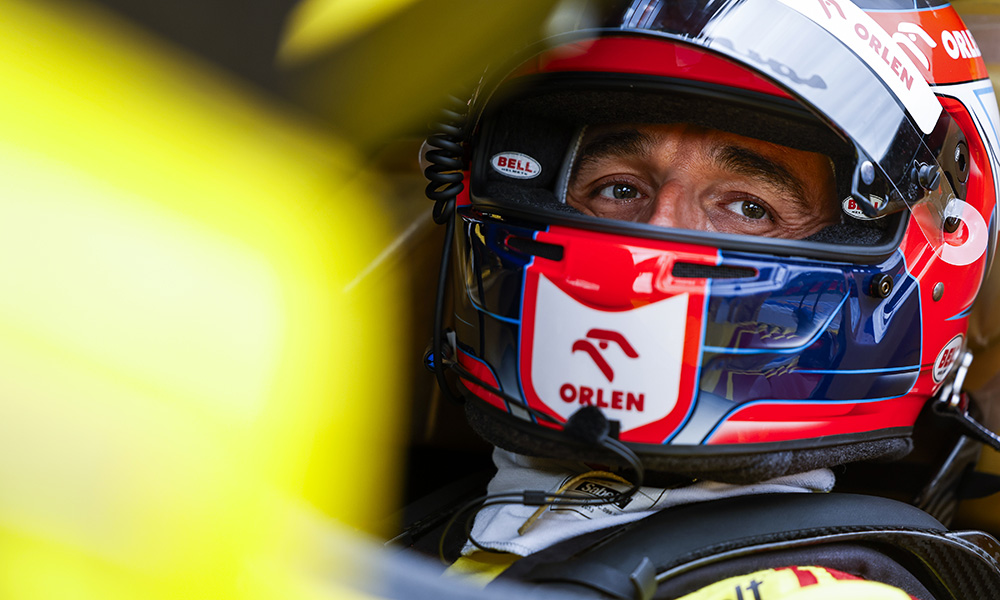
Photo: Julien Delfosse/DPPI
If there’s one stat that tells the story of how the 24 Hours of Le Mans was won, it’s this: Kubica entered the cockpit of the satellite AF Corse Ferrari 499P at 12:27 p.m. on Sunday, and would drive right through to the checkered flag at 4 p.m. In total, the Polish driver piloted the yellow No. 83 car for a shade under ten hours, more than any other Hypercar driver in the entire field (co-drivers Yifei Ye and Phil Hanson each spent around six hours, 40 minutes at the wheel). That Kubica was able to hold off a relatively fresh Estre to seal Ferrari its third consecutive Le Mans victory on a day that its works entries couldn’t sustain their pace to the end was truly remarkable.
Make no mistake — Kubica was the only thing standing between Porsche Penske Motorsport and victory on that sunny mid-June day in France. A glance at the averages from the race tells you all you need to know. On the fastest 30 laps, 50 laps and 75 laps, Kubica topped the timesheets, with a widening margin the larger the sample. At 75 laps, his advantage over Antonio Giovinazzi was three-and-a-half tenths. The gap to Ye was getting on for seven tenths; to Hanson, a staggering second-and-a-half. Not only was Kubica’s triumph a brilliant story in its own right for a driver many feel should have been Formula 1 champion in other circumstances, it was also redemption for what was, frankly, a shocking lapse in judgement last year at La Sarthe when Kubica made contact with Dries Vanthoor’s BMW on the Mulsanne Straight.
Le Mans was the clear highlight of Kubica’s season, and the reason he occupies such a lofty placing on this list, but it’s not the only strong performance he turned in. In the season opener in Qatar, he held on against the factory Ferrari driver of Alessandro Pier Guidi on old tires to keep second, which would prove important later on considering how the title race unfolded. At Brazil, he was the fastest Ferrari driver by a massive margin, and then there was pole position in tricky conditions at the Circuit of The Americas. As far as the championship battle went, it felt like Kubica was defying gravity — and sadly, the Lone Star Le Mans race, where Kubica pitted mistakenly thinking he had a puncture and was waved by, was the beginning of the end for he and his co-drivers’ title hopes.
As of the time of publication, it isn’t confirmed that Kubica will be back in the No. 83 Ferrari in 2026, although there has been no indication that the lineup will change. At 41 years old, he insists his motivation to chase further victories at Le Mans is undimmed. Watching him attempt to reach similar heights will make for fascinating viewing.
2. Laurens Vanthoor

Photo: Porsche
Last year’s overall Driver of the Year falls one spot on this year’s list, but that’s not to detract from another excellent campaign for the elder Vanthoor brother at the wheel of Porsche Hypercar and GT3 machinery across Europe, North America and Asia.
Vanthoor’s record in the WeatherTech Championship speaks for itself — four appearances, three wins. Two of those were in support of Felipe Nasr and Nick Tandy in two of the ‘big three’ events, the Rolex 24 at Daytona and the Mobil 1 Twelve Hours of Sebring. In both Florida enduros, Vanthoor was impressively close to the regulars, about a tenth down on Nasr on each occasion using a 75-lap sample. Then there was Long Beach, where Vanthoor provided a reminder of his versatility by hopping in the ‘Rexy’-themed AO Racing Porsche 911 GT3 R on a weekend where the team’s regulars were unavailable, duly scooping a win together with Jonny Edgar. But most impressive of all was arguably the Motul Petit Le Mans finale, where Vanthoor not only pulled double duty across both Porsche Penske Motorsport cars, but ended up fastest on average of the three drivers in the title-winning No. 6 machine.
In the WEC, there were only four races in which the Porsche 963 was truly competitive — the stretch from Le Mans to Fuji — and the fact Vanthoor was invariably the starting driver in the regular races generally meant fewer opportunities to shine for the Belgian than Estre, although he did the lion’s share of the driving in Sao Paulo and also put on a strong recovery in his opening stint at Fuji. But the highlight was Le Mans, where the Belgian was just two tenths shy of Estre and marginally faster than Campbell on a 50-lap average as he and his co-drivers fell agonizingly short of victory.
Add to that a spellbinding double victory in the Nürburgring 24 qualifiers in terrible conditions (although the less said about Top Qualifying for the race itself, the better…), a podium in an extra-curricular appearance in the 24 Hours of Zolder, and a combative drive to second in the Suzuka 1000km alongside Estre, and Vanthoor can look back on satisfaction in a year that yielded six wins and 11 podiums from 16 starts.
1. Kelvin van der Linde (Overall and GT Driver of the Year)

Photo: Gruppe C Photography/SRO
Embarking on his first year as a BMW factory driver after multiple seasons contracted to Abt Sportsline, as well as a challenging first WEC campaign with Lexus in LMGT3, ex Audi Sport ace Kelvin van der Linde proved to be an extremely quick learner with the BMW M4 GT3 EVO, nearly pulling off a podium finish in his first race with the car in January’s Rolex 24 at Daytona, before taking a historic victory with the previous-gen iteration at the Meguiar’s Bathurst 12 Hour, alongside his younger brother Sheldon and Augusto Farfus for Team WRT.
Van der Linde’s long-awaited first triumph at Mount Panorama kickstarted a worldwide tour of success in major GT3 endurance races. Victory in the GT World Challenge Europe powered by AWS Endurance Cup season-opening 6 Hours of Paul Ricard, with Charles Weerts and Ugo de Wilde was followed up by his third Nürburgring 24 triumph, sharing a ROWE Racing BMW with Farfus, Raffaele Marciello and Jesse Krohn.
The South African also won the Suzuka 1000km with Marciello and Weerts and closed out the Intercontinental GT Challenge season with victory in the Indianapolis 8 Hour presented by AWS with Weerts and his WEC LMGT3 season-long co-driver Valentino Rossi. With four wins out of five IGTC races, it was easily enough for van der Linde to cement himself as the drivers’ champion in the globe-trotting GT3 series, although he admittedly wished that he could have shared the title with his fellow BMW co-drivers such as Weerts and Marciello, who were alongside him for much of the season.
He was, however, able to share the GTWC Europe overall drivers’ title with Weerts, courtesy of three wins on the season in what came down to a dramatic title-decider in the Endurance Cup season finale in Barcelona that also saw the Vincent Vosse-led WRT squad claim the teams’ championship. The duo also picked up the Sprint Cup title.
While van der Linde finished eighth in the WEC LMGT3 standings with only two class podiums to his credit, in what was arguably affected by the BMW’s Balance of Performance, the 29-year-old won every major headline GT3 endurance race he entered except for the CrowdStrike 24 Hours of Spa in a single year, a feat that will likely never be repeated again.



Porsche Carrera Cup NA
Hedge Wins Rain-Soaked Third Road America Race

Porsche Carrera Cup NA
Kleck Inherits Race 2 Win After Hedge Penalty

GT World Challenge Europe
Gounon Takes Pole as 2 Seas Makes Waves at Magny-Cours

WeatherTech Championship
Nasr Feels PPM is Running in “Separate Championship”

WeatherTech Championship
Watch Road America Preview With John Doonan


WeatherTech Championship
Points-Leading Cadillac Takes BoP Hit for Road America

WeatherTech Championship
IMSA LMP2 Teams in Favor of 2029 New Car Debut


Porsche Carrera Cup NA
Porsche Driver Development Members Complete Workshop

Intercontinental GT Challenge
BMW Working With Rossi Ahead of Targeted N24 Debut

WeatherTech Championship
Watch Road America Preview With John Doonan

WeatherTech Championship
IMSA Endurance Hour Podcast: Ep. 35: Ryan Hardwick

Mustang Challenge NA
Inside IMSA’s Support, Single Make Series With John Doonan

Ferrari Challenge NA
Watch Full-Length Replays of Rounds 9 & 10 at Sonoma

Ferrari Challenge NA
A Lap of Sonoma Raceway With David Bitton