Photo: Toyota
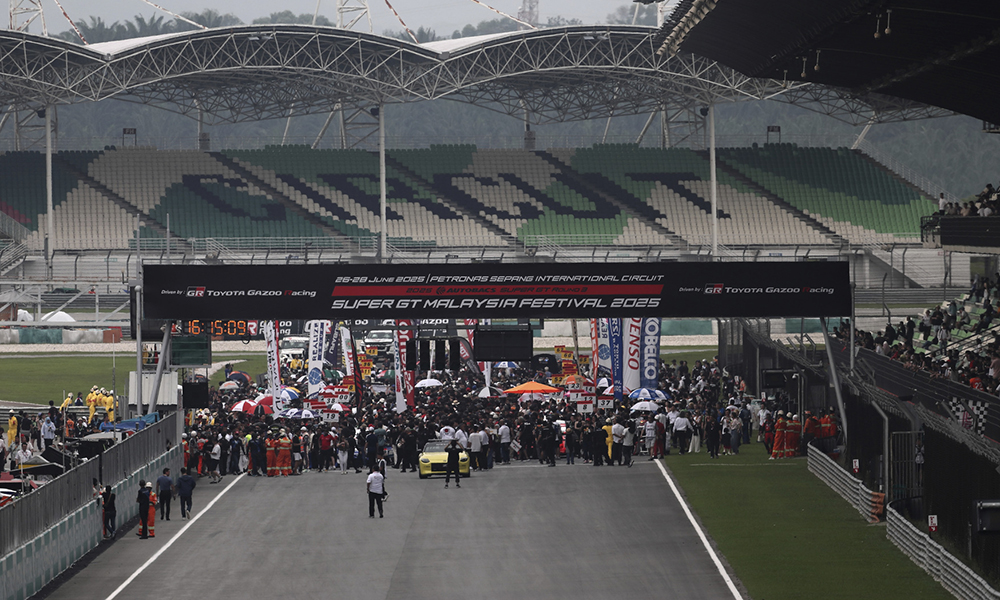
SUPER GT organizer GTA has explained further the circumstances that forced this year’s Sepang 300km to be called off.
The GTA and event promoter HARO Sports & Entertainment announced on Wednesday that the series’ return visit to Sepang slated for June 19-21 will not take place, while on Friday a reduction in this year’s calendar to seven races was confirmed.
It comes amid the economic impact that has arisen from the U.S./Israel-Iran conflict and the imperative to reduce fuel consumption in the countries that have been worst-affected by the reduction in fuel supply from the Gulf region.
Addressing reporters on Sunday ahead of the opening round of the new season at Okayama, GTA chairman Masaaki Bandoh explained in further detail the circumstances behind what was billed as a “postponement” of the Sepang round.
“The main reason we were forced to postpone the race is the sharp rise in the price of fuel and crude oil,” Bandoh told assembled reporters.
“In Japan, there are currently no real restrictions or signs of self-restraint [around fuel usage], but overseas there are many countries which are starting to impose restrictions and exercise self-restraint on a large scale.
“In Malaysia, the per-person quota of subsided fuel is being cut to 200 liters a person [from 300 liters]. Government workers are now working from home and the government is devising plans to reduce the amount of fuel that it consumes.
“Against that backdrop, the cost of logistics [around holding the event] have also risen sharply, including fuel surcharge on air fares and hotel costs. The lead time on sending containers has also increased from around six weeks to eight weeks or more.
“There are not yet specific restrictions in Malaysia on holding large-scale events, but we took into consideration the steps that the government has made and the fact that more and more people in the country are placing limits on themselves.”
Bandoh went on to clarify that the reason the term “postponement” was used in the original announcement is due to the three-year contract to hold the Sepang race that began in 2025 and ends in 2027 — the 2026 race could therefore be considered “postponed” to 2028, after the current contract ends.
With regards to a possible replacement race in 2026 on Japanese soil, Bandoh admitted the matter was discussed with teams, including the possibility of turning an existing race into a double-header, but ultimately deemed imprudent.
He likewise ruled out the possibility of increasing race distances, with the previously-announced numbers — 300km across the board except for the three-hour events at Fuji Speedway in May and Autopolis in October — remain unchanged.
“It’s clear that eventually such [impacts on fuel use] will occur in Japan,” said Bandoh.
“I think in such a situation, we could not really consider the idea of increasing the number of events held on Japanese soil from seven to eight.
“There was also the idea of extending the race distances if we only hold seven races. But due to the impacts of the crisis in the Middle East, we felt it best to stick to our original race distances and try and overcome the current situation.”
Further, it was clarified by the GTA that despite the reduction in the number of races, the penultimate round at Autopolis will continue to be held with success handicaps being halved, and then eliminated altogether for the Motegi finale in November.



Lamborghini Super Trofeo
Season-Long Titles to be Settled Ahead of World Finals in Monza

WeatherTech Championship
TDS Returns to Two-Car LMP2 Effort in 2027

Michelin Pilot Challenge
IMSA Shifts Pilot Challenge Testing Off 2027 Roar Weekend

GT World Challenge Europe
McLeod Targeting Next Step After First Mustang GT3 Test

GT World Challenge Europe
SRO GT Academy Winner Hartling Earns GetSpeed Drive

WeatherTech Championship
IMSA Endurance Hour Podcast: Ep. 40: Foley, Auberlen & More

Mustang Challenge Global Inv.
Mustang Challenge Global Invitational Launched for 2027

Pirelli GT4 America
Muniz: “Feels So Good” to Earn First Championship With Ford


WeatherTech Championship
13 Autosport Commits to GTD Return With Corvette

Intercontinental GT Challenge
Fleming: Second Overall “Unbelievable” for Archangel

WeatherTech Championship
IMSA Endurance Hour Podcast: Ep. 40: Foley, Auberlen & More

FIA WEC
Watch Highlights of 6H Barcelona