Photo: David Haueter
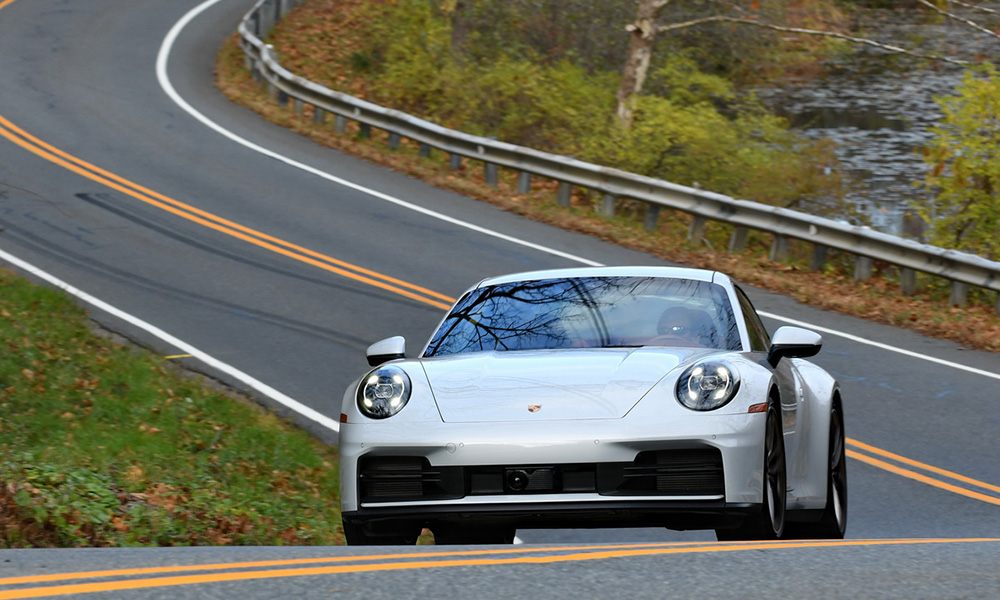
The venerable Porsche 911 is possibly the single best sports car produced over the last sixty years. It’s pretty amazing that a model lineup that’s been around as long as the 911 can go through decades of evolution and change and yet still be at the pinnacle of the segment it competes in.
And the thing is, all the 911s are great cars. There’s not a bad one in the bunch, and one of the best overall 911s in the lineup isn’t even the most expensive or the most powerful.
The 911 Carrera S is positioned between the 911 Carrera T and the 911 Carrera GTS in the model lineup.
All 911 models from the base model Carrera through the T, S and 4S models are powered by a twin-turbocharged three-liter flat six, with displacement jumping to 3.6-liters when you get to the GTS model.
The Carrera S got a bump in power beginning with the 2025 model year, up to 473 hp from 443 hp in 2024. Torque stayed the same at 390 lb.-ft., but peak torque hits 100rpm lower, at 2,200 rpm.
The engine changes made between 2024 and 2025, which carried over into 2026, include a larger intercooler and new turbochargers that were borrowed from the previous GTS model.
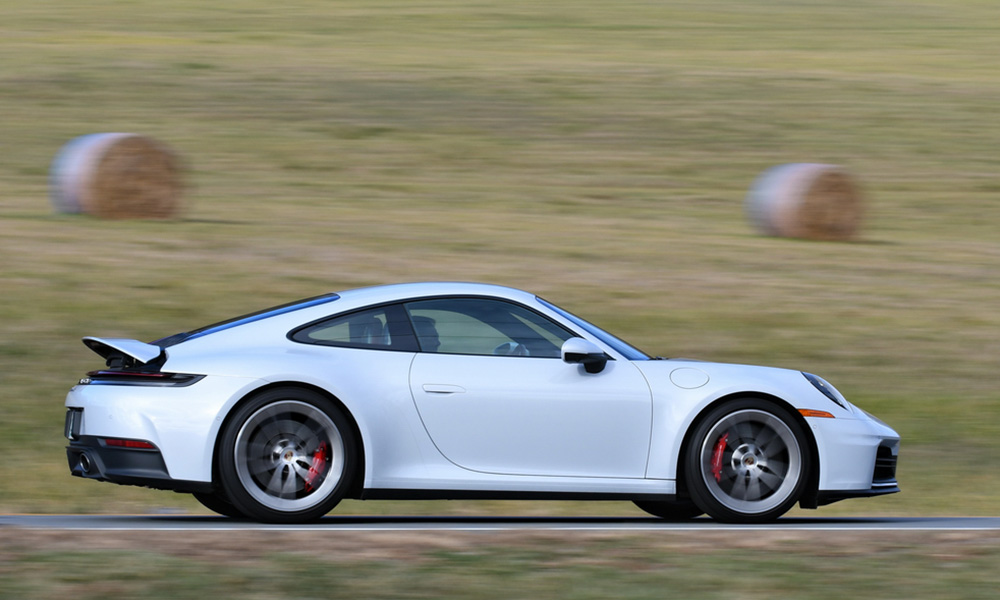
Photo: David Haueter
The 0-60 mph sprint happens in a very quick 3.3 seconds, or 3.1 seconds if you get the Sport Chrono Package option ($2,450) which among other features, includes “performance-oriented tuning of the engine, transmission and chassis.”
The brakes were also upgraded between 2024 and 2025 model years. They feature 16.1-inch rotors at the front with six-piston calipers, and 15-inch rotors at the rear with four-piston calipers.
The Sport Chrono Package is one of a myriad of options you can choose for a Carrera S. The long list of options on our test car included the $1,280 PASM Sport Suspension (which has firmer, shorter springs that also lower the car by 10mm), Rear Axle Steering ($2,220) and Carrera Exclusive Design Wheels ($2,790).
All told, the price on our test car approached $180,000 with all the options, up from the $156,200 base price. The key thing to remember here is that the Carrera S is still a great car if you don’t add any options, but they’re there if you want them.
Ironically, one of the options I found most useful is also one of the least expensive. The extended range fuel tank is only $240 and allows for 22.1-gallon fuel capacity, up 5.5 gallons over the standard tank.
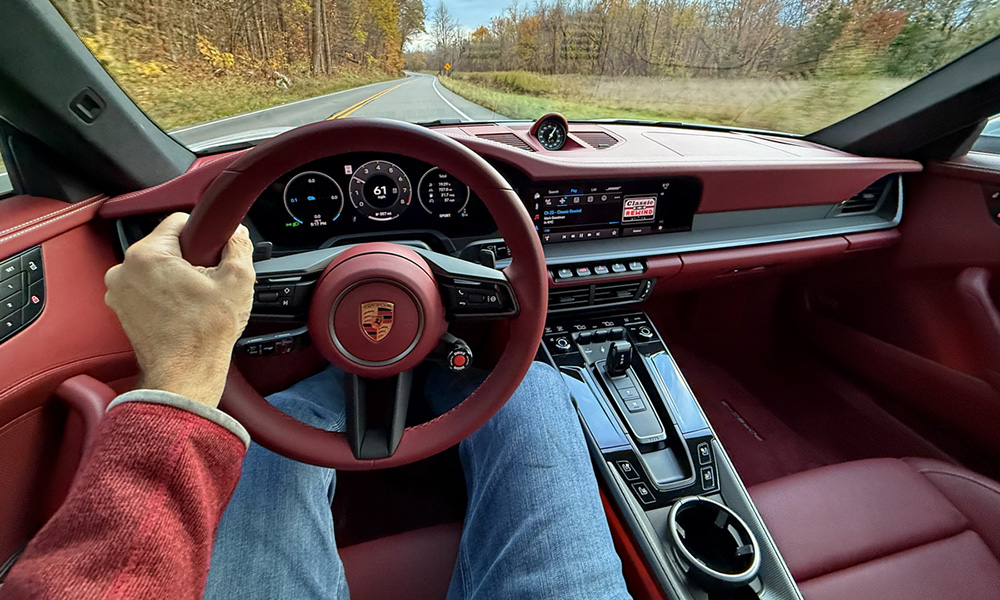
Photo: David Haueter
It’s a great option if you like taking long drives and don’t like stopping for fuel. I also appreciate that Porsche offers five seat choices for the Carrera S.
Our test car had the 18-way Adaptive Sports Seats Plus, a $3,680 option, and the standard seats are 4-way Sport Seats. Speaking of seats, you can also opt out of the rear seat if you just want to use that space for storage.
The 911 has grown a lot larger over the years, but it still has that iconic design that makes it instantly recognizable. You can’t say that about many other legendary models that still exist today, such as the BMW M3 for example.
The 911 has also become a lot more modern inside, but it’s all very intuitive, and I appreciate that Porsche has left some controls as analog switches and dials, rather than putting all the functions onto a screen.
The only thing that seems a bit out of place is the stubby gear lever. Push buttons would work just as well and look better.
The biggest impression I was left with after driving the 911 Carrera S for a week is how it so easily transitions from the kind of normal driving we do every day to making you feel like Kevin Estre on twisty back roads.
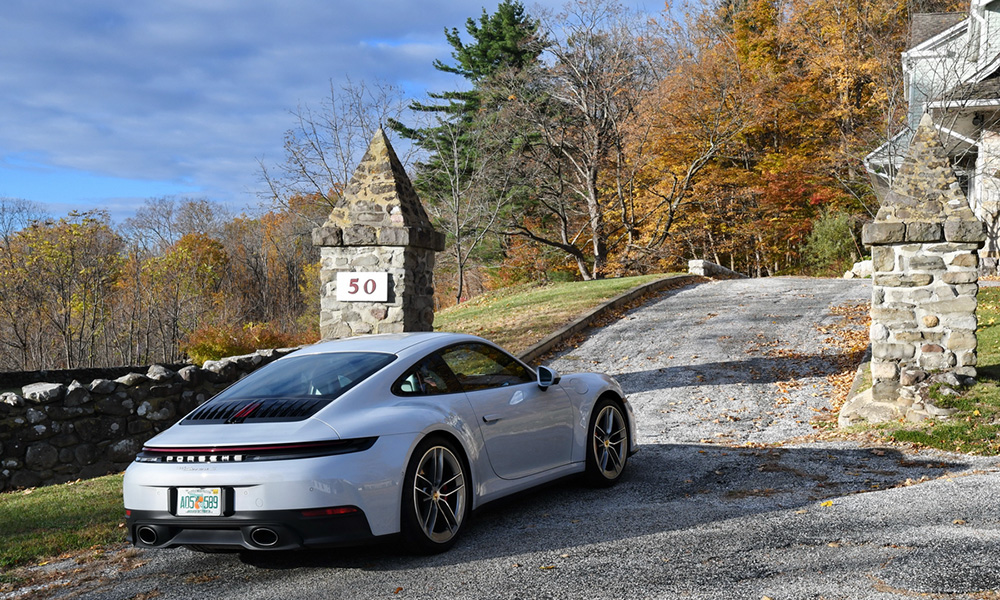
Photo: David Haueter
As long as you don’t need to put people in the back seat or a huge amount of trunk space, you could easily live with the Carrera S as a daily driver. It’s firm but comfortable for highway driving without being overly loud and is easy to drive at low speeds around town, but get it onto a back road and its true nature comes out.
The amount of grip this thing has is pretty astounding. On the twisty back roads of northwest New Jersey near Swartswood Lake, the 911 Carrera S is remarkably fast yet composed and well-balanced, encouraging you to push harder until common sense takes over (as in, you could end up in jail if caught at these speeds).
It pulls really hard out of corners with just an initial touch of turbo lag, but the immediacy of the power delivery in the midrange and on the top end is very impressive. It’s hard to imagine needing more than this in a sports car.
Porsche offers a choice of driving modes in the 911, from a Wet setting to full on Sport Plus. I found the Sport setting to be where I kept it almost all the time, as it provided better throttle response and gear selections than the more sedate Normal mode.
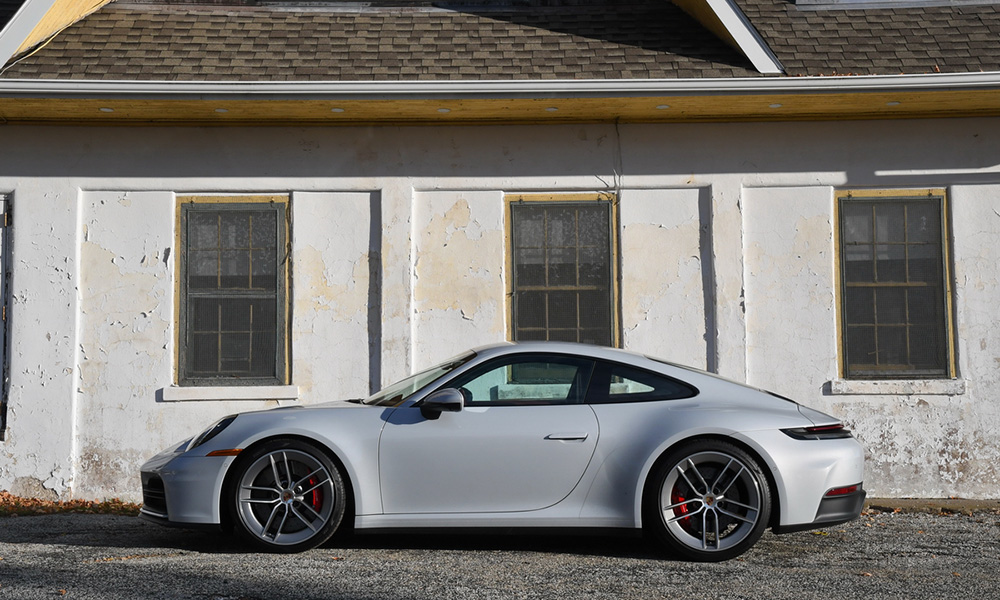
Photo: David Haueter
On smooth and twisty roads, dialing it up to Sport Plus delivered a bit more performance, and in both Sport and Sport Plus the PDK automatic transmission (the only transmission option on this car) seemed to always be in the correct gear. The brakes were also strong with good pedal feel.
Will the 911 be around for another 50 years? I hope so, but it will be interesting to see how the car evolves and if it can retain its aura and performance while delivering a classic 911 experience to the driver.
If anyone can do it, I’m confident Porsche can.
In the short-term, we’ll also be seeing even more 911s on the race track, as a GT4-spec 911 is set to replace the 718-based GT4 models that are so popular in Pirelli GT4 America and IMSA Michelin Pilot Challenge.
We’d love to see a street-legal 911 inspired by the GT4 model.
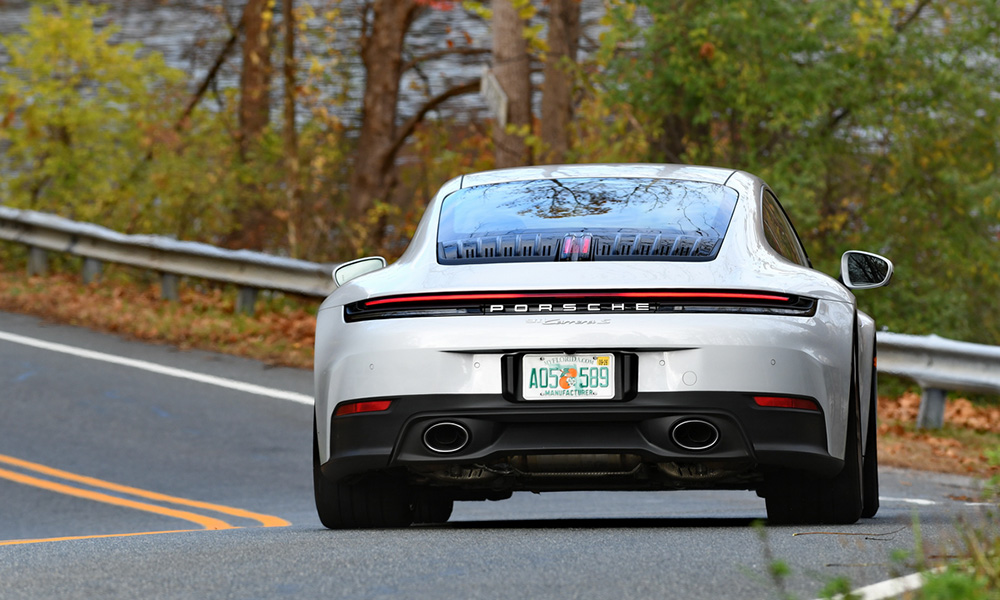
Photo: David Haueter



GT World Challenge America
Barber Saturday Notebook

Toyota GR Cup NA
Kohlbecker Extends Points Lead With Saturday Barber Win

GT World Challenge America
Sargent Completes Practice Sweep at Barber

Pirelli GT4 America
Estep, Baltas Win Race 2 After Late-Race Pro-Am Contact


GT World Challenge America
Dyszelski: Open-Wheel Know-How Helped in Rapid GT3 Debut

24H Series
24H Dubai to be Moved to Kyalami


Asian Le Mans Series
Asian Hypercar Class in Jeopardy for 2026-27 Season


WeatherTech Championship
Acura to Run ‘Thank You’ Livery for Final Two IMSA GTP Races


FIA WEC
Watch WEC’s Fuji Race Preview

WeatherTech Championship
Watch the Full-Length Replay of Battle on the Bricks

Porsche Carrera Cup NA
Watch Full-Length Replays of Rounds 11 & 12 at Indy

Lamborghini Super Trofeo NA
Watch Full-Length Replays of Rounds 9 & 10 at Indy

WeatherTech Championship
No Letting Up at Indy as Team WRT Takes First IMSA GTP Win