Photo: Fabrizio Boldoni/DPPI
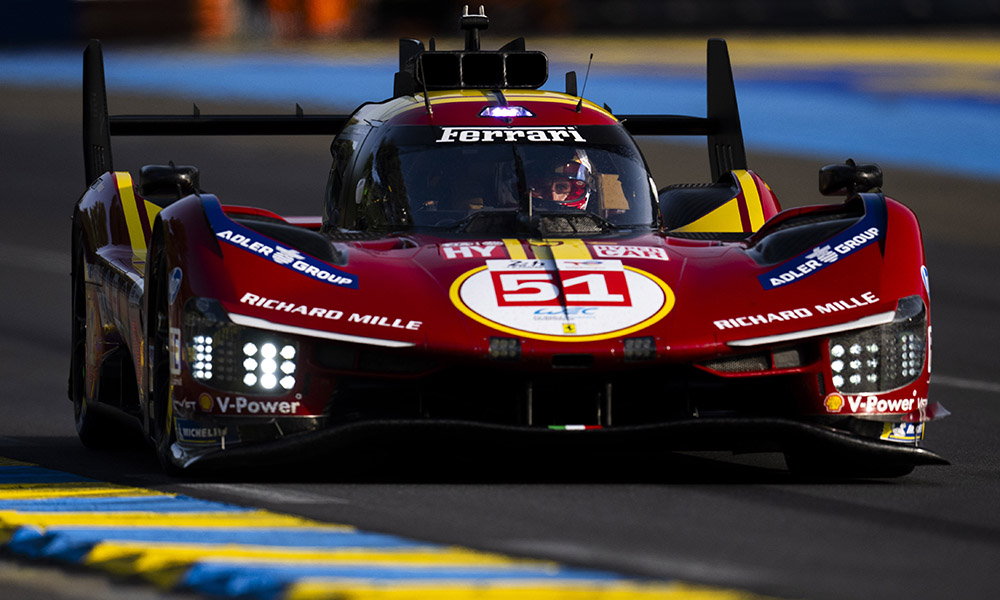
Ferrari’s dominant 499P has been handed a double hit in the Balance of Performance for this week’s FIA World Endurance Championship event in Sao Paulo.
The bulletin published on Tuesday shows that the Italian manufacturer heads to Interlagos with a minimum weight of 1069 kg, an increase of 12 kgs since the previous regular WEC race at Spa in May, and a maximum power below 250 km/h of 480 kW.
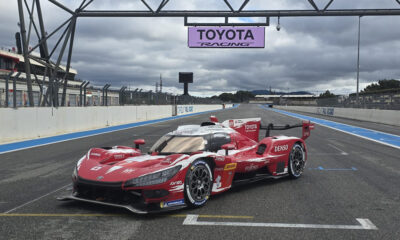
That makes the 499P the joint-heaviest car together with the Toyota GR010 Hybrid, which remains at the same weight as Spa, and the least powerful below the so-called Power Gain threshold, 5 kW slower than the Toyota, which has gained 5 kW.
It follows Ferrari’s dominant start to the season, with wins in all four races that have taken place so far, including the 24 Hours of Le Mans that utilizes a separate BoP.
Balancing the reduction in base power is an increase above the 250 km/h threshold of 5.6 percent, to 506.9 kW, an increase of 1.9 percent since Spa.
Following a change to the BoP methodology that was confirmed by the FIA following the Spa round, the BoP for each car in the Hypercar class is now calculated using data from each manufacturer’s best two races from the previous three, excluding Le Mans.
As well as the Ferrari, the BMW M Hybrid V8 and Alpine A424 have been handed weight increases since Spa of 9 kg and 8 kg, respectively.
However, while the BMW has been given an extra 2 kW of base power, bringing it up to 505 kW, the Alpine has given a reduction of 8 kW, dropping it to 512 kW, making it the only other car besides the Ferrari to lose power since Spa.
On the opposite side of the spectrum, the Cadillac V-Series.R and Porsche 963 have both lost 2 kg, putting them on 1040 kg and 1053 kgs, respectively.
Both cars have also been given power hikes below 250 km/h, with the Porsche up 7 kW to 501 kW and the Cadillac now at 516 kW, a whopping 15 kW increase from Spa.
Peugeot’s weight and power below 250 km/h are unchanged from Spa, meaning the 9X8 stays with a 1030 kg and maximum power of 520 kW, figures that are now matched by the Aston Martin Valkyrie following a reduction of 5 kgs for the British car.
However, the Peugeot has been hit with a reduction in its Power Gain of 6 percent, the largest in the field, while the Aston Martin now has a value of zero percent.
Toyota has the largest Power Gain in the field of 7.2 percent, giving it 519.9 kW above the threshold, albeit at a circuit with few long straights to make use of this.
Corvette Biggest Winner Amid Major Swings in LMGT3 BoP
The BoP for the LMGT3 class has seen major shifts from the previous regular WEC race at Spa, with no fewer than five double-digit weight changes in the class.
Most notable among these is the Chevrolet Corvette Z06 GT3.R, which has been handed a significant 25 kg weight break and will now run at 1345 kg — although both TF Sport-run entries carry a 6 kg success handicap for Sao Paulo.
Also with significant weight reductions are the McLaren 720S GT3 Evo, which goes down by 17 kg to 1348 kg, and the Mercedes-AMG GT3 Evo that is now the third-lightest car in class at 1338 kg after a difficult start to the season.
Porsche’s 911 GT3 R is the lightest car at 1334 kg, followed by the Aston Martin Vantage GT3 Evo at 1335 kg, a reduction of 10 kg from Spa.
Conversely, the Ford Mustang GT3 has been hit with a 19 kg weight increase and now will run at 1351 kg, lighter only than the Lexus RC F GT3 (unchanged from Spa at 1354 kg) and the BMW M4 GT3 EVO at 1358 kg, an increase of 12 kg.
The Ford is also one of only two three cars in LMGT3, together with the Lexus and the Ferrari 296 GT3, to miss out on a power increase for Sao Paulo.
Getting the biggest increase of three percent are the BMW, Corvette, McLaren and Porsche, with the Mercedes-AMG gaining two percent and the Aston Martin one percent.
AF Corse’s No. 21 Ferrari will run at a class-topping 1388 kg when success ballast is factored in, following victory at Spa, while the No. 92 Manthey Porsche that won at Le Mans is next up at 1370 kg.



Lamborghini Super Trofeo Europe
30 Entries for Paul Ricard Season Kickoff


GT World Challenge Europe
Van der Linde ‘Motivated to Push’ for Back-to-Back Titles

GT World Challenge America
Watch SRO America’s Sonoma Postcard

European Le Mans Series
Debutant Hughes Sets Pace on Prologue’s First Day

Nürburgring Endurance
HWA EVO.R a “Passion Project” for Van der Zande

GT World Challenge Europe
Stroll to Make Surprise GT3 Debut in Paul Ricard Opener


European Le Mans Series
Proton to Run Porsche Tribute Livery on No. 75 LMGT3 Entry

WeatherTech Championship
Pfaff Confirms Temerario GT3 Entry for Long Beach With Vanier

WeatherTech Championship
Sebring Delivers All-Time 115,000 Attendance Record
GT World Challenge America
Watch SRO America’s Sonoma Postcard

WeatherTech Championship
IMSA Endurance Hour Podcast: Ep. 29: Hawksworth & Gonzalez

Toyota GR Cup NA
Watch Full-Length Replays of Rounds 3 & 4 at Sonoma

McLaren Trophy America
Watch Full-Length Replays of Rounds 1 & 2 at Sonoma