Photo: Fabian Lagunas/SRO
Todd Coleman has praised the level of competition in GT World Challenge America powered by AWS, stating that it didn’t initially appear to be as fierce when making the decision to return to SRO America and make his full season GT3 debut.
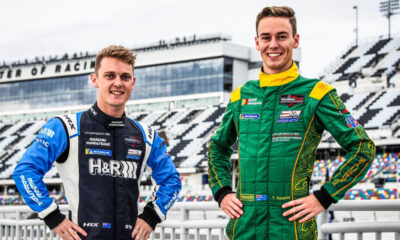
Coleman, a previous competitor in Pirelli GT4 America and GT America, is mounting a full-time campaign this year in Archangel Motorsports’ McLaren 720S GT3 Evo alongside longtime co-driver Aaron Telitz.
The duo achieved considerable success overseas at the tail end of last year, in McLaren machinery, winning the Michelin 24H Barcelona as well as a second-place finish in the Gulf 12 Hours in Abu Dhabi after finishing first on the road but having been assessed a post-race pit lane speeding penalty.
While facing a challenging first few races to their GTWC America season, Coleman and Telitz sit fourth in the Pro-Am class standings entering this weekend’s pair of races at Virginia International Raceway.
“I think we’re getting there,” Coleman told Sportscar365. “I purposely did the the analysis coming here, and there was a reason why we came back to SRO.
“When we were looking at SRO, the competition didn’t appear to be as stiff as it is this year. This year is really, really good competition all the way around.
“The Pros are super good; the Ams are really good.
“But the analysis was that I’m not ready to go a step into IMSA, so let’s go keep building on that.
“The benefit of running in Asia and Europe, where we had a lot of cars on the track, so we were constantly getting different looks for passing opportunities or being passed, as the case may be.
“So I think that has translated really well to get us comfortable here.”
Despite not yet reaching the podium in GTWC America, Coleman has set realistic expectations for his first full season of GT3 competition, knowing the 720S GT3 Evo package has its particular strengths at certain tracks and weather conditions.
“This car, it’s biggest challenges is heat, humidity and when you’re following behind another car on top of that,” he said. “Otherwise, everything else seems to be clicking.
“When [Aaron] and I set up the car, he knows what I’m capable of and I know know what I’m capable of, so ultimately, I’m the lowest common denominator when we’re setting it up.
“This car is not a tough car to drive. Once you’re in it, it actually handles pretty well.”
Coleman added: “I think Sebring was more reflective of what we’re capable of and where we want to start building on.
“The confidence is pretty high. We feel good in the car. This is a high-commit track as well. I tend to do better at faster, high-commit tracks.
“I think we’re exactly where we want to be, just keep building on it.
“We always want more straight-line speed. This is where this car has struggled; it’s kind of the BoP that we have. It is what it is.
“This car is amazing in fast corners but if you look at the top speed times going from Sonoma to COTA to Sebring, this car is not at the top.
“BMW, Corvette, even Porsche to some extent [have more top speed], but we try and make up for it in the faster corners.”
Coleman said his long-term target is to enter the GTD ranks in the WeatherTech Championship, although admitted he will only make the switch when he feels the time is right.
“The goals have always been to keep doing big experience races, go run more endurance, even though this is more sprint-like,” he said. “But my goal is to continue to do more endurance.
“Ultimately my goal is to be a predictable good Am going into IMSA. I don’t want to be the guy that everyone’s looking at the clock, ‘How do we burn all of his minutes and get him the hell out of the car as quickly as possible?’
“That’s the goal.”
When asked if next year’s GTWC America format change, which will see a single feature three-hour race instead of two 90-minute sprints, could play to his benefit, Coleman pointed out the strategic element it could add.
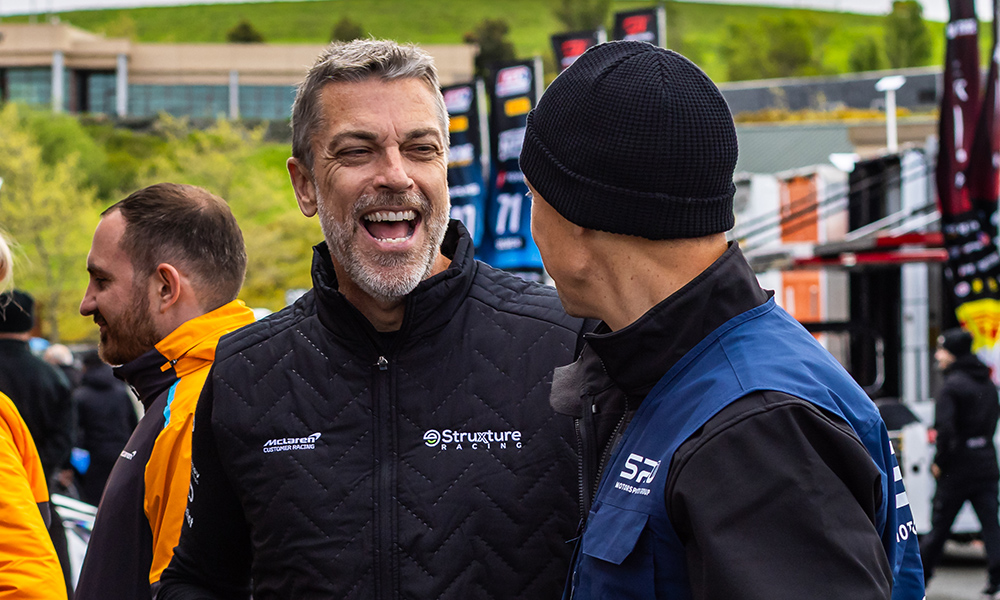
Archangel team owner Mike Johnson is arguably known as one of the best race strategists in North American sports car racing.
“It makes it more interesting, for sure,” said Coleman. “Because strategy really factors in, especially if they adopt the same three-hour strategy that they did at COTA for the GT4, where they limit you to you a single stint, as opposed to the Pros doing doubles and then just burning the Bronze time.
“If you can make sure that the Bronzes are all oriented around the same amount of time… Because I want to go race Bronzes.
“That definitely makes it more interesting for sure.”
Jonathan Grace contributed to this report



WeatherTech Championship
Porsche Leads After Three Hours, Drama for No. 6 Car

WeatherTech Championship
Porsche Penske Dominates Rolex 24 Opening Hour

WeatherTech Championship
Daytona Pre-Race Notebook

WeatherTech Championship
Estre Disputes Porsche’s Pre-Race Favorite Tag

WeatherTech Championship
Ford Drivers Targeting GTD Pro Title After 2025 Rolex 24 Win

WeatherTech Championship
Caldarelli, Bortolotti Set for “Emotional” Huracan Farewell


WeatherTech Championship
Check Out First Photos from Roar Unload at Daytona

WeatherTech Championship
Daytona Saturday Notebook

WeatherTech Championship
No. 40 WTR Cadillac Undergoes Major Engineering Shakeup


WeatherTech Championship
Daytona Thursday Notebook

WeatherTech Championship
Watch the Rolex 24 Race Trailer

WeatherTech Championship
Watch the Full-Length Replay of Qualifying for Rolex 24

WeatherTech Championship
Altzman on Climb Up Ford Racing Ladder, Rolex 24 Debut


WeatherTech Championship
IMSA Endurance Hour Podcast: Ep. 25: Season Preview