Photo: Porsche
Both the 2025 and 2026-spec of the Porsche 963 have been given the largest weight breaks, in class-wide GTP Balance of Performance adjustments for next weekend’s Sahlen’s Six Hours of The Glen.
Released by IMSA on Wednesday, all six specifications of GTP class entries, including the Aston Martin Valkyrie, will be lighter for the third leg of the IMSA Michelin Endurance Cup.
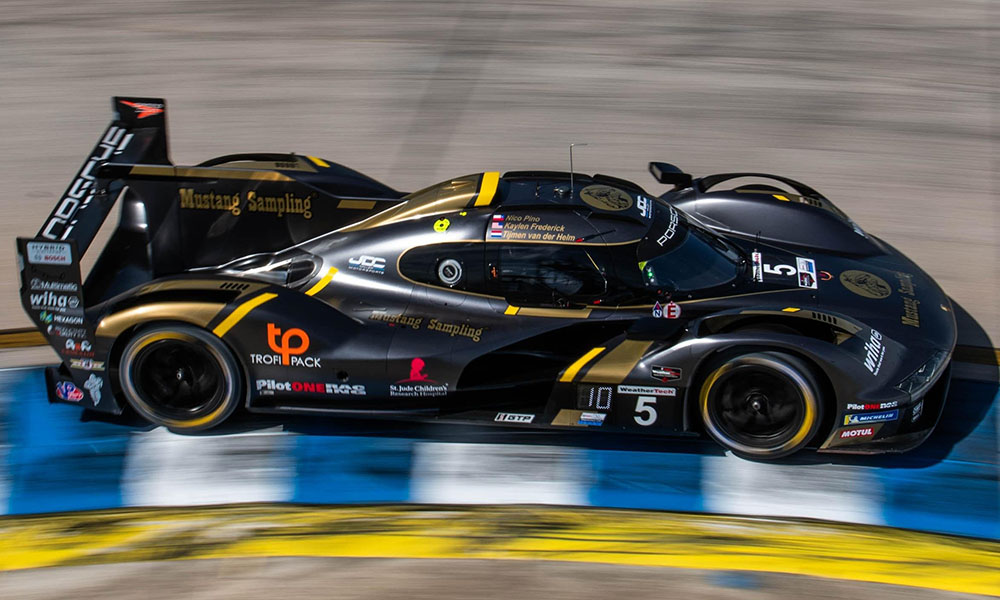
JDC-Miller Motorsports’ Porsche, which runs to last year’s aero specifications, has received a 24 kg weight break, bringing it down to 1058 kg.
By the same token, the factory Porsche Penske Motorsport entries are now back down to 1073 kg, marking a 27 kg weight break since Detroit.
Both the Cadillac V-Series.R and Acura ARX-06 have been handed 6 kg weight reductions, with the BMW M Hybrid V8 getting a 1 kg reduction.
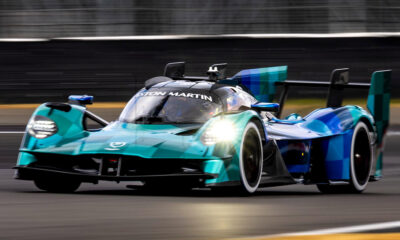
Of note, the Valkyrie has received a 10 kg weight break, bringing the LMH-based prototype down below the platform’s baseline minimum weight of 1030 kg for the first time. It will race at 1020 kg next weekend.
The Aston, however, remains at the max 520 kW power output across both stages, which have been increased to 230 km/h and 240 km/h, respectively, after running at lower thresholds at the two street circuits and Laguna Seca.
Additionally, the 2026-spec Porsche gets a 2.3 percent increase at the first stage, while remaining at the maximum power in Stage 2.
By comparison, the JDC-Miller car has received a 1.2 percent increase at low-end and a 1 percent decrease at top end power.
All of the other LMDh-based prototypes have received slight power reductions at the first stage: Acura (-1.7 percent), BMW (-0.8 percent) and Cadillac (-1.4 percent), with power increases at Stage 2: Acura (+3.4 percent), BMW (+2.9 percent) and Cadillac (+3.8 percent).
Porsche Gets Double BoP Break
In addition to the adjustments in GTP, Porsche’s 911 GT3 R Evo has received both a notable weight break and power increase in the GTD Pro and GTD classes.
The car will now be 10 kg lighter since its most recent configuration in Detroit, while also getting a 4.4 percent increase in Stage 1 and 2.7 percent boost in Stage 2, the latter which will now see the car run at its maximum declared power.
As is the case in GTP, the class-wide stage thresholds have been adjusted up to 190 km/h and 200 km/h for Watkins Glen.
Aside from some slight weight increases, the largest given to the Ford Mustang GT3 EVO at +6 kg and but countered by a 3.5 percent increase in second stage for the car, and a 3.7 percent increase in top end for the Chevrolet Corvette Z06 GT3.R, there are no other major changes to the production-based ranks.
Of note, the Lamborghini Temerario GT3 has been also given a 3.5 percent power increase in Stage 2, which is believed to help offset the car’s homologated rear wing settings, which have been adjusted in DTM and GT World Challenge Europe competition but not in IMSA.
Sportscar365 understands that the new-for-2026 car would have to re-visit the Windshear wind tunnel in order for any possible aero configuration changes to be made outside of the car’s FIA homologation.
This article was updated on Thurs. June 18 at 3:07 p.m. EST to reflect the correct Porsche 963 minimum weight numbers. The original post was accurate on the amount of weight lost since Detroit but not the new weight, in kgs, for both specifications of cars for Watkins Glen.



GT World Challenge America
Gidley Confirmed for GTA Return; Selected GTWC Races With SKI

Intercontinental GT Challenge
ABT Extends Lamborghini Partnership, Temerario to N24

GT World Challenge Europe
Razoon Porsche Squad Expands to Two Cars for Portimao

Pirelli GT4 America
Three-Hour Enduro Moves to Road America in 2027

GT World Challenge America
Adelson “Extraordinarily Happy” With Wright’s Re-Expansion

European Le Mans Series
Masson Sets the Pace in Tight Opening Portimao Practice

WeatherTech Championship
Factory Mustangs to Run 125th Anniversary ‘Sweepstakes’ Livery

Intercontinental GT Challenge
Palou Joins Lone Star Racing for Indy 8H Return

Asian Le Mans Series
Two Ferrari 499Ps First Confirmed Hypercar Entries

Intercontinental GT Challenge
KRC Eyes Full IGTC Season; Confirms Macau Return


Asian Le Mans Series
Two Hypercars on 47-Car Full Season Entry List

WeatherTech Championship
Watch the Full-Length Replay of Motul Petit Le Mans

Toyota GR Cup NA
Watch Full-Length Replays of Rounds 11 & 12 at Barber

Porsche Carrera Cup NA
Watch Full-Length Replays of Rounds 13 & 14 at Road Atlanta

Michelin Pilot Challenge
Watch the Full-Length Replay of Fox Factory 120

WeatherTech Championship
Watch Extended Highlights of Motul Petit Le Mans