Photo: SUPER GT
Honda says the distance from the leaders in Monday’s SUPER GT race at Fuji Speedway has made the deficit faced by its new Prelude GT500 challenger “clearer”.
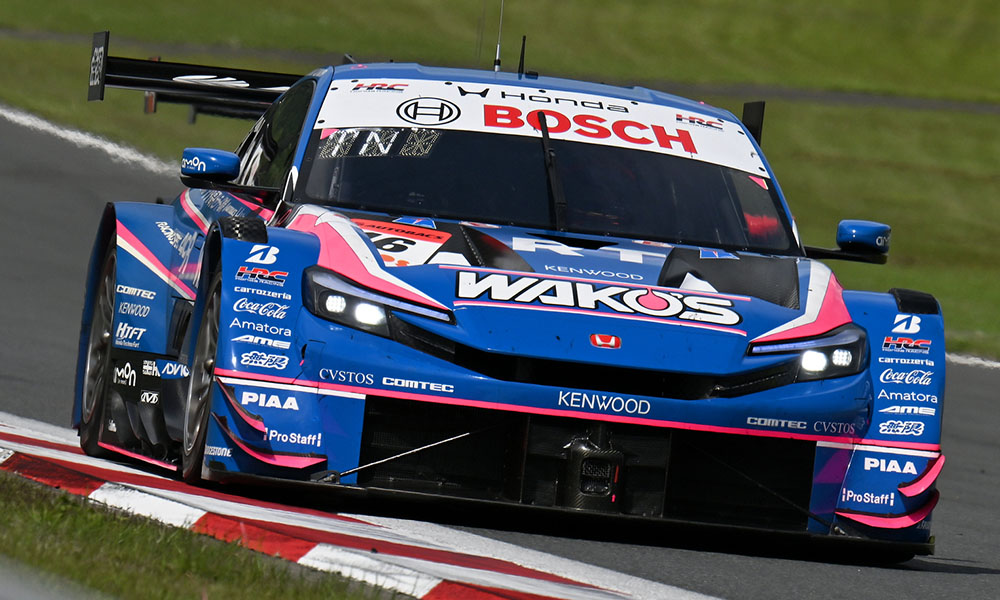
The Sakura brand’s much-anticipated HRC Prelude-GT, which replaced the Civic Type R-GT for 2026, has had a low-key first two races, with a best finish of sixth in last month’s Okayama opener and fifth in Monday’s three-hour Golden Week fixture.
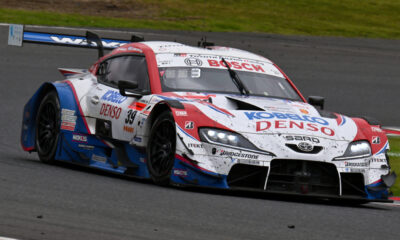
Both results were achieved by the No. 16 ARTA entry of Tomoki Nojiri and Ren Sato, who finished 54 seconds down on the winning TOM’S Toyota GR Supra at Fuji.
The next-best placed Honda was the Team Kunimitsu car in eighth, while the Real Racing example was ninth and the No. 8 ARTA car finished out of the points in 11th.
Honda GT500 project leader Tomohiro Onishi told reporters post-race that the Prelude’s failure to match the performance shown so far by the GR Supra or the Nissan Z, the best of which finished third on Monday, is indicative of the car’s level.
“We saw it in qualifying as well, but the gap to the top cars throughout the race was very much in line with the Prelude’s current overall performance level,” said Onishi.
“Although there were variations in performance across our cars depending on tire selection and track temperature, and some of our cars had good pace at certain times, we didn’t have enough pace to go on the attack against our rivals or pull away from them.
“We are clearly lacking in performance, and this situation has become even clearer. We need to analyze the data from the opening two races so that we can improve.
“Because the Sepang race was cancelled, there is a long gap until the next race [at Fuji in August], so I want to make the best possible use of this time to catch up.”
ARTA’s No. 16 car was once again the pick of the Preludes as Nojiri recovered from eighth on the grid to run fourth before handing over to Sato for the second and third stints, although the team was overcut by the SARD Toyota at the second round of stops.
The sister No. 8 car ran fifth in the early stages but dropped out of the top 10 before its first pit stop, while the Kunimitsu Honda also struggled in the first stint.
Onishi observed that difference in tire selection was likely the reason why the No. 16 ARTA Prelude fared comparatively well against the other Bridgestone Hondas at Fuji.
“No other Honda used the same tire as the No. 16 car for the whole race, and I think their tire selection is the main reason they had the best pace among the Hondas,” he said.
“The same was the case in Round 1 [at Okayama], so we don’t know if they are just being helped by the tires, or whether the outcome would have been the same even if the No. 16 was using the same tires as some of the other Preludes that struggled.
“Not only the tires, but the No. 16 is also going about the set-up differently to the other Hondas, so that is something we also need to analyze properly.”
ARTA team director Aguri Suzuki commented that Hiroki Otsu’s pace aboard the No. 8 car “was good for about the first ten laps” but that “the performance suddenly dropped once the temperature began to fall”, suggesting a mistake in tire selection.
Onishi added the No. 16 car’s results at Okayama and Fuji likely reflect the Prelude’s current ceiling in terms of performance with its current set-up philosophy.
“It’s hard to say with certainty, but I can’t help but feel that the No. 16 team is close to getting the most out of the current package,” he said.
“We have to accept the reality that we are far away from the top. Even if the No. 16 is performing to its full potential, we have to consider if we need to start completely afresh with a totally different set-up concept during this extended break.”
Asked if having back-to-back races at Fuji might be an advantage for Honda with June’s Sepang race cancelled, Onishi replied: “I wouldn’t say it’s an advantage, but it’s good that we can thoroughly review what happened today and try out solutions.
“If we went to a different circuit, and there are some tracks we still haven’t driven on with the Prelude, if something unpredictable happens we may get lost.
“I think we can make various improvements based on today’s Fuji race, so having two races back-to-back at the same track is helpful to see how much progress we made.”




Sportscar365+
INSIGHT: How Buemi Became Central to Toyota’s Success

Porsche Carrera Cup NA
Entries Open for 2027 Carrera Cup Season


Toyota GR Cup NA
Watch Full-Length Replays of Rounds 13 & 14 at Indy

Intercontinental GT Challenge
Yardley: “Incredible” Feeling to Win SRO GT Academy Prize


Intercontinental GT Challenge
13 Autosport Set for Bathurst 12H Debut; N24 Plans in Works


WeatherTech Championship
IMSA Honors Season’s Best at Night of Champions

WeatherTech Championship
Road Atlanta Post-Race Notebook
Toyota GR Cup NA
Watch Full-Length Replays of Rounds 13 & 14 at Indy


Pirelli GT4 America
Watch the Full-Length Replays of Rounds 12 & 13 at Indy

Intercontinental GT Challenge
Watch Highlights of Indy 8H

Intercontinental GT Challenge
Watch the Full-Length Replay of Indy 8H