Photo: Florent Gooden/DPPI
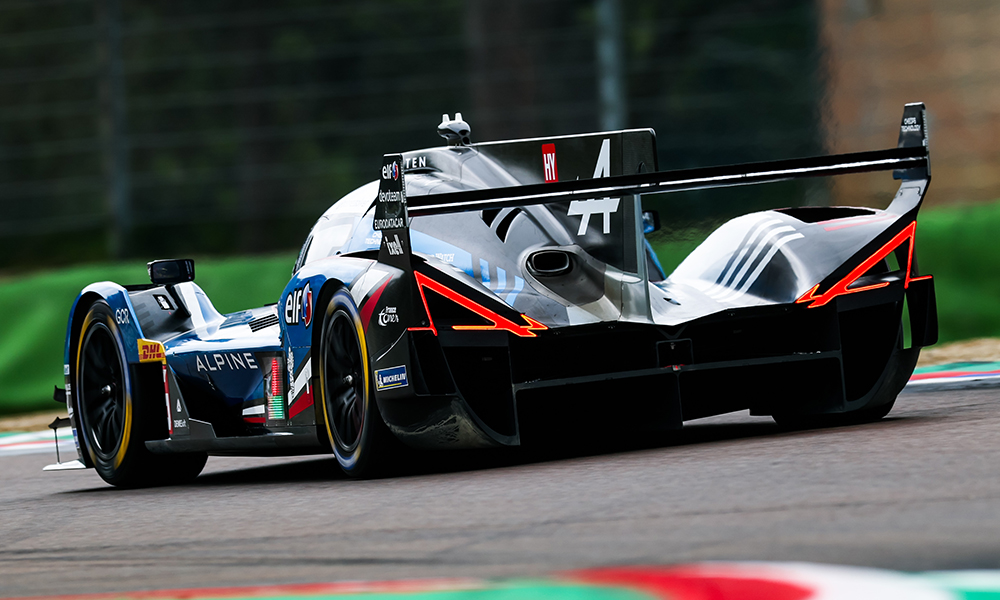
Alpine has “options” to keep its A424 LMDh cars in service upon the conclusion of the current FIA World Endurance Championship after the French marque’s works withdrawal, according to Alpine Tech vice-president Axel Plasse.
In February it was announced that the 2026 campaign would be the third and final one for the current factory project with the A424 in the WEC amid shifting priorities for the Renault-owned marque and changes in senior management.
However, that doesn’t mean the ORECA-chassised car could not race on in customer hands, either in the WEC or in the Asian Le Mans Series which will be newly open to Hypercar entries for the upcoming 2026-27 season.
Both Alpine team principal Philippe Sinault and Plasse alluded to this when asked by Sportscar365 ahead of last weekend’s 6 Hours of Imola about the future of both the Signatech team and the A424 itself beyond 2026.
“It’s not only [about] Signatech,” said Sinault. “It’s a common future.
“All the time in motorsport, the future is on the track. We have to register this year a good performance [on-track] to consider if we can have a future. I am quite sure [not only] Signatech, but also my drivers and everyone in Alpine can have a future.
“About the car, I can’t say anything at the moment. But we’ll see.”
While Signatech is known to be open to discussions with potential new manufacturers aiming to join the WEC in future, a privately-funded A424 program could be used as a bridging solution to keep the team in operation in the meantime.
Plasse added that “there are options” for the A424 to keep racing before he was asked about the possibility of the future of the Viry-Chatillon Alpine Tech facility more broadly and the chances of the marque one day returning to sports car racing.
“We are working on many options as you can guess,” said Plasse, who essentially took over from Bruno Famin as the head of the Alpine WEC project late last year.
“I would say that due to the really talented people we have, those in the internal combustion engine field and the electric power train field, there are many good options.
“We are having many discussions with different possible stakeholders and customers. I cannot disclose names but we are working on some good options.”
Alpine’s decision to exit the WEC came despite the considerable investment it had made in preparing for a potential future hydrogen-powered entry.
It was the only other manufacturer in Hypercar besides Toyota to produce a prototype design using liquid hydrogen, the Alpenglow Hy6 that was presented in late 2024 and made a demonstration run at the 24 Hours of Le Mans last year.
Plasse confirmed at Imola that the economic situation had convinced Alpine to pause development on all of its hydrogen-related projects.
“We don’t see a short-term future in passenger car mobility in hydrogen,” said Plasse. “We are putting on hold most of our development on this technology.
“We have good assets especially in liquid hydrogen development but we are putting them on hold as the market is moving towards battery electric right now.”
Toyota: Work Ongoing to Make Hydrogen Class Attractive
Amid Alpine’s impending exit from the WEC, Toyota has been left as the sole current Hypercar manufacturer that is known to be actively working on plans to compete at Le Mans with a hydrogen-powered car in future.
Discussions are ongoing between the governing bodies and interested manufacturers to create a set of technical regulations, with 2028 remaining the ACO’s target date for the new class to make its debut in the French endurance classic.
“We have a working group that is discussing this topic together with the ACO, the FIA and some other manufacturers,” Toyota Racing vice-president Nakajima told Sportscar365 when asked for an update on how the rules are taking shape.
“At the end of the day, there has to be some kind of compromise between technology development versus affordability and feasibility of the category. We need to find the right balance between those two elements.
“The more we can do [on development] the better, but there’s also the realistic limit that everyone can afford, so we need to find the right balance.”
Nakajima acknowledged that the use of spec components could help contain costs and increase the attractiveness to the hydrogen class to other manufacturers.
“I think that sort of idea is a key element to get more competitors together,” he said. “Then the question is similar to what we’re currently having [with the 2030 Hypercar rules] but I think there should be some sort of compromise. I hope so at least.”
Stephen Lickorish contributed to this report



WeatherTech Championship
Watch NBC’s WeatherTech Championship Season Review

Lamborghini Super Trofeo
Season-Long Titles to be Settled Ahead of World Finals in Monza

WeatherTech Championship
TDS Returns to Two-Car LMP2 Effort in 2027

Michelin Pilot Challenge
IMSA Shifts Pilot Challenge Testing Off 2027 Roar Weekend

GT World Challenge Europe
McLeod Targeting Next Step After First Mustang GT3 Test

GT World Challenge Europe
SRO GT Academy Winner Hartling Earns GetSpeed Drive

Mustang Challenge Global Inv.
Mustang Challenge Global Invitational Launched for 2027

Pirelli GT4 America
Muniz: “Feels So Good” to Earn First Championship With Ford


WeatherTech Championship
13 Autosport Commits to GTD Return With Corvette

Intercontinental GT Challenge
Fleming: Second Overall “Unbelievable” for Archangel

WeatherTech Championship
Watch NBC’s WeatherTech Championship Season Review

WeatherTech Championship
IMSA Endurance Hour Podcast: Ep. 40: Foley, Auberlen & More

FIA WEC
Watch Highlights of 6H Barcelona