Photo: Julien Delfosse/DPPI
The FIA is in the process of overseeing a series of safety tests in preparation for the planned introduction of hydrogen-powered Hypercars into the FIA World Endurance Championship in 2030.
During the ACO’s press conference at this year’s 24 Hours of Le Mans, the broad brushstrokes of proposed hydrogen regulations were revealed including details of how these cars would be balanced with the more conventional hybrid Hypercars.
The FIA has also previously revealed details of how hydrogen’s adoption into various levels of motorsport could work, but now the finer details are being determined.
While liquified hydrogen has been chosen as the safest way to store the fuel, rather than as a gas as originally intended, tests are now being conducted on various materials to establish the best to use for the hydrogen fuel tanks in the cars.
These have included destructive and crash tests of various hydrogen storage tanks at a specialist test facility on behalf of the governing body.
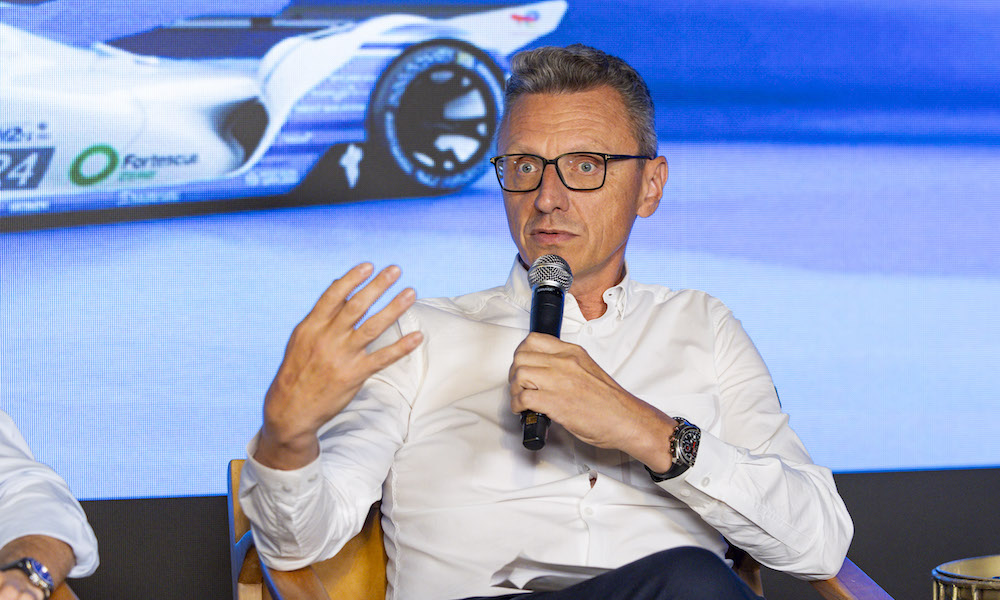
“Obviously, as is the case with any new technology we want to introduce at competition level, there’s a lot of challenges we need to go through, so we need to go step by step,” the FIA’s senior circuit sport director Marek Nawarecki told Sportscar365.
“Now we’re in the very important phase, the stage where we evaluate all the safety aspects of the new technology.
“So we’ve chosen the base and now we start the study about the implementation, so we are running now a series of tests with hydrogen fuel tanks being submitted to different types of constraint to see the effects and to define more precisely what should be the safety measures that we need to apply to the liquid hydrogen fuel tank and that power unit to be sure that we don’t miss anything in the next steps.
“The next step would be the work we have to do on the specific technical regulations and then it will come to the implementation of those standards into the physical model of the car.”
Nawarecki added that, alongside different materials, the level of protection required is also being assessed during these crash tests.
He said that once these standards and regulations have been defined, the FIA will then need to work closely with its member clubs around the world to ensure the hydrogen-powered cars meet local government laws and the motorsport venues are prepared for its introduction.
Nawarecki described being “reasonably optimistic” that there will be hydrogen-powered Hypercars on the WEC grid in 2030.
“The hydrogen technology in motorsport is part of hydrogen [use] in the automotive industry as well,” he said. “We have no choice but to work with the industry on that.
“Our partners are the manufacturers, the manufacturers are part of this journey and we know that many of them have an interest in this technology — some of them already start to work, not all.”
However, he cautioned that hydrogen must not be the sole focus of the FIA moving forward and that other alternative fuels must also be explored.
“We cannot be focused only on one single technology, we need to be open to a variety of technologies,” Narawecki explained.
“This is where it’s important to understand that, yes I am optimistic that the opening to hydrogen will work well, but it will never be the only way.
“When we see what’s happening in the world, we see the variety in the powertrain, the differences also in energy supply in different parts of the world makes the future more diverse in terms of the type of technology we adapt and we need to have this versatility also as a part of motorsport regulations.”



Lamborghini Super Trofeo Europe
Gilardoni, Iaquinta Seal Title in Bizarre Circumstances

Lamborghini Super Trofeo NA
Touchette “Never Expected” LB Cup Title in First Season

Lamborghini Super Trofeo NA
Bamber Controls Final Race, Ericsson Fights to Second

WeatherTech Championship
IMSA Endurance Hour Podcast: Ep. 41: Hall of Fame Drivers

Lamborghini Super Trofeo NA
Champion De La Torre Seeks to Build Lamborghini Career

Lamborghini Super Trofeo
Drivers Lament “Last Hurrah” of Huracan Super Trofeo “Beasts”

Mustang Challenge Global Inv.
Mustang Challenge Global Invitational Launched for 2027

Porsche Carrera Cup NA
Entries Open for 2027 Carrera Cup Season

WeatherTech Championship
Joint IMSA-SRO Daytona BoP Test Canceled


FIA GT World Cup
New AO Design Part of Four-Car Porsche Macau Assault

FIA GT World Cup
Bamber Makes Surprise Macau Return With Audi
WeatherTech Championship
IMSA Endurance Hour Podcast: Ep. 41: Hall of Fame Drivers


WeatherTech Championship
Watch NBC’s WeatherTech Championship Season Review

WeatherTech Championship
IMSA Endurance Hour Podcast: Ep. 40: Foley, Auberlen & More