Photo: Julien Delfosse/DPPI
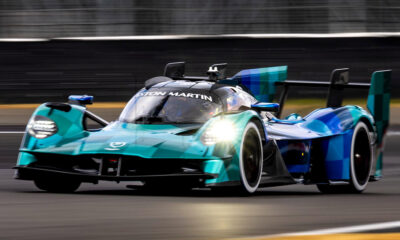
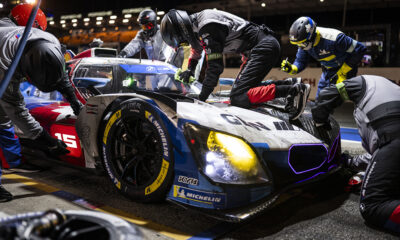
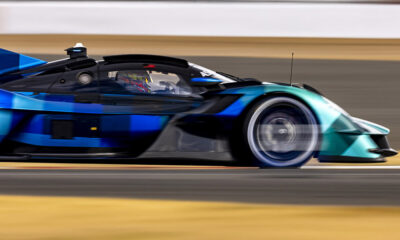
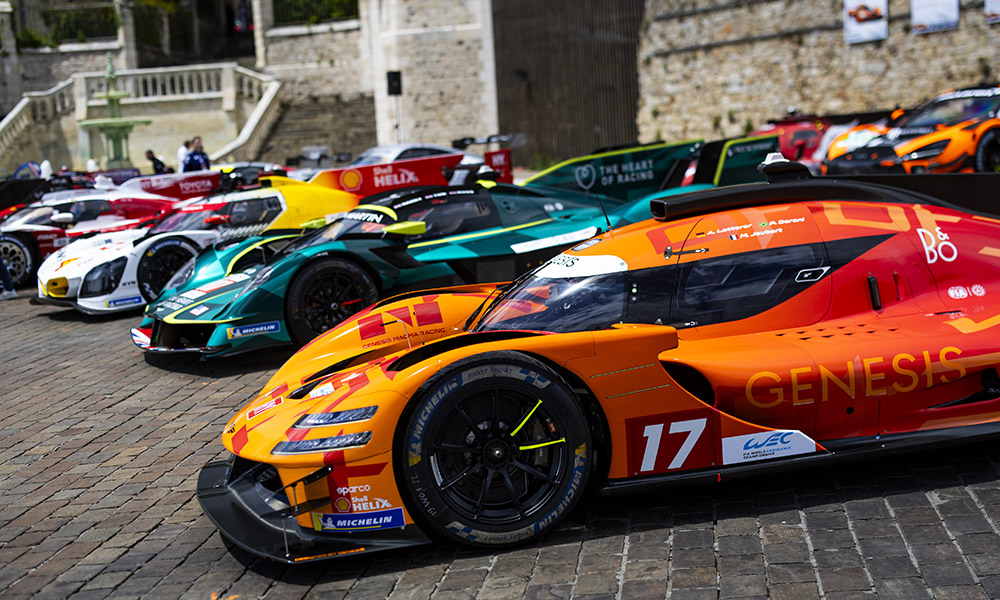
The FIA, ACO and IMSA have confirmed the foundation of a unified set of top-class prototype regulations that are due to debut in the 2030 World Endurance Championship and WeatherTech SportsCar Championship seasons.
Revealed during Friday’s annual ACO press conference in Le Mans, it was announced that a single two-wheel drive platform will be adopted across both series, in contrast to most LMH cars currently being four-wheel drive.
Manufacturers will have the choice to either use a registered constructor’s complete spine alongside common parts like a hybrid system, in a similar way to the current LMDh rules, or they will have the opportunity to develop their own chassis and hybrid system.
In either case, all components must comply with the same technical specifications and there will be no performance jokers allowed across a minimum of five years.
The only circumstances in which an joker would be permitted are to address a reliability or safety issue or if a “significant deficit of performance” can be demonstrated.
All cars must be rear-wheel drive and a hybrid system, with 20kW more internal combustion power permitted than at present, will be mandatory at the rear of the car, but there will be freedom on engine architecture and capacity.
In terms of bodywork, there will be a prescribed underfloor and diffuser and a “smaller aerodynamic window” compared to the current regulations.
Rule-makers said the changes for 2030 are designed to reduce budgets while still allowing manufacturers the chance to develop their own cars with a distinct identity, and also be more simple with the single platform.
Specific details for a future hydrogen-powered class were also revealed by the ACO based on a similar rear-wheel drive platform to the common rules but with an Equivalence of Technology between conventional Hypercars and ‘H2 Hypercars.’
Speaking at the press conference, IMSA President John Doonan said the new common rules are a “win for everyone.”
“When you look at the current era of endurance sports car racing, we’ve shown what’s possible when stakeholders come together with a common vision and today is the next step in that,” he added.
“When we announced convergence in 2020 in Daytona together the manufacturers voted yes to endurance sports car racing. Now today we open up another chapter in this story.
“Having a single platform is something I dreamed about since I was a little boy and now it’s coming together.
“It’s a win for the manufactures, the suppliers, the chassis constructors and, most of all, for our fans.
“As we move to the next phase it’s the duty of the technical working groups to further define what Richard [Mille, President of the FIA Endurance Commission] shared a moment ago but we’re very optimistic about this moment.
“Today’s the framework, now it’s our responsibility to make sure this platform continues to deliver value and return on investment for everyone involved. We hope this continues for decades to come.”
Additional manufacturer working group meetings are now planned to finalize the set of regulations.
“The full set of 2030 regulations will be ready by the end of this year,” said ACO deputy director of competition Bruno Famin.



24H Series
First 24H Kyalami Entries Confirmed


Pirelli GT4 America
Watch the Full-Length Replays of Rounds 12 & 13 at Indy

Porsche Carrera Cup Asia
Giltrap Beats Amand to Title After Double Singapore Win

Toyota GR Cup NA
Colby Makes History; Kohlbecker Clinches Title in Race 2 at Indy

Pirelli GT4 America
Muniz: “Feels So Good” to Earn First Championship With Ford

Intercontinental GT Challenge
Finalized Indy 8H Entry List Released; DragonSpeed Out

Intercontinental GT Challenge
13 Autosport Set for Bathurst 12H Debut; N24 Plans in Works

WeatherTech Championship
Lamborghini GTD Pro Program Unclear for 2027

WeatherTech Championship
Vanthoor Delivers Porsche Penske Win at Petit Le Mans

Michelin Pilot Challenge
Circle H Wins; AutoTechnic Takes GS Title at Road Atlanta

Pirelli GT4 America
Watch the Full-Length Replays of Rounds 12 & 13 at Indy

Intercontinental GT Challenge
Watch Highlights of Indy 8H

Intercontinental GT Challenge
Watch the Full-Length Replay of Indy 8H

WeatherTech Championship
Watch the Full-Length Replay of Motul Petit Le Mans

Toyota GR Cup NA
Watch Full-Length Replays of Rounds 11 & 12 at Barber