Photo: Fabrizio Boldoni/DPPI
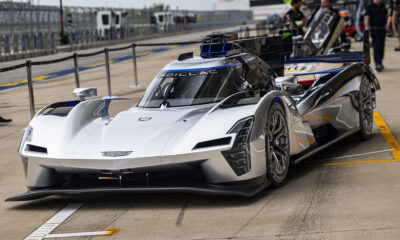
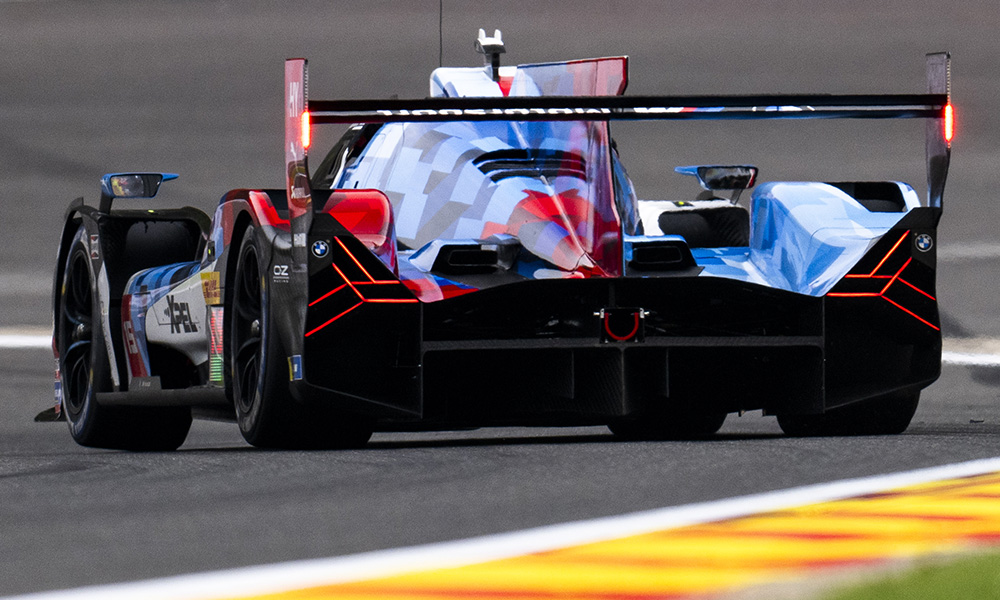
More than 83 hours of racing into Team WRT’s first dual season with the BMW M Hybrid V8, the team already has plenty to show for it: the program’s first Hyperrcar victory in the FIA World Endurance Championship round at Spa, a second-place finish in the 24 Hours of Le Mans and three podiums in the IMSA WeatherTech SportsCar Championship.
But there has been little time to stop and appreciate the scale of it.
“There’s not really any time to process that,” said Adam Hardy, BMW M Team WRT’s LMDh lead engineer. “We still haven’t got the win in IMSA, which we’re after.”
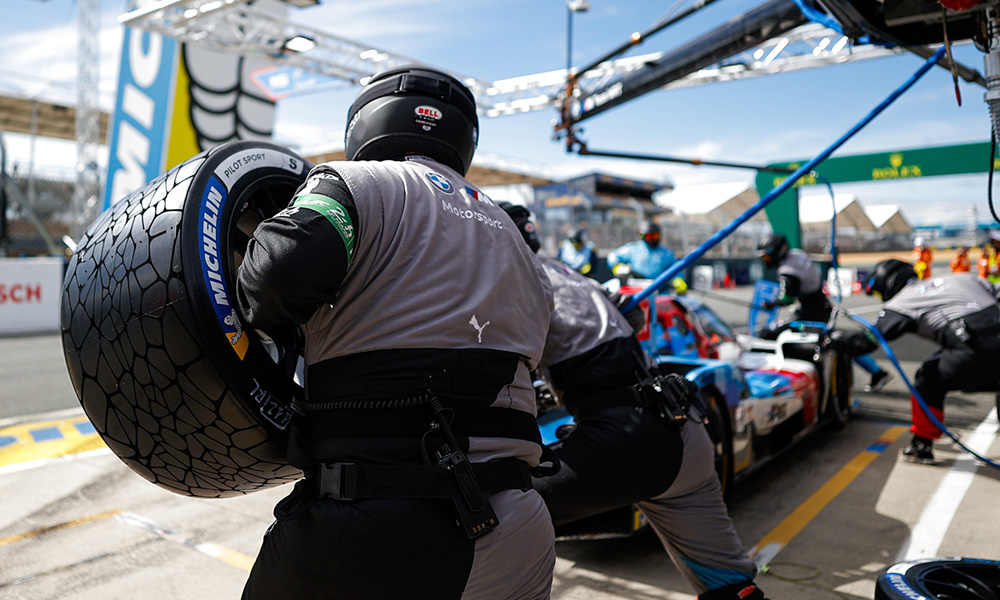
Photo: Frederic Le FLOC’h/DPPI
Double the Program, Double the Learning Opportunity
Team WRT is in its first IMSA GTP season while also continuing its BMW Hypercar program in WEC. Rather than treating those as separate efforts, the team is using them as connected development platforms. The IMSA program helps in WEC, and the WEC program helps in IMSA.
One reason that connection works is because the team is not starting from a completely different baseline when it crosses from one championship to the other.
The BMW M Hybrid V8 runs in both programs, and Michelin’s Pilot Sport Endurance tire gives the team a common tire platform to evaluate across two very different racing environments.
“It’s obviously completely open and shared data,” said Hardy. “So we’re able to take the bits that we think are good from one aspect to another.
“The cars are the same and the tires are the same, so in the end we’re already narrowing down quite a lot of variables. We’re actually using quite a lot of concepts that we found in Spa and at Le Mans for Watkins prep.”
With Michelin as a constant across both programs, WRT can better understand which lessons are specific to a circuit and which can travel with the car.
In WEC, teams have two Michelin tire compounds available at each race and three compounds available at Le Mans. In IMSA, teams use one compound, except at Daytona, where cold overnight temperatures can require a different option.
“So the fact that we can gain a lot of information from the WEC side where we’re often using multiple compounds, it definitely helps us in our direction for what we need to do for IMSA,” said Hardy.
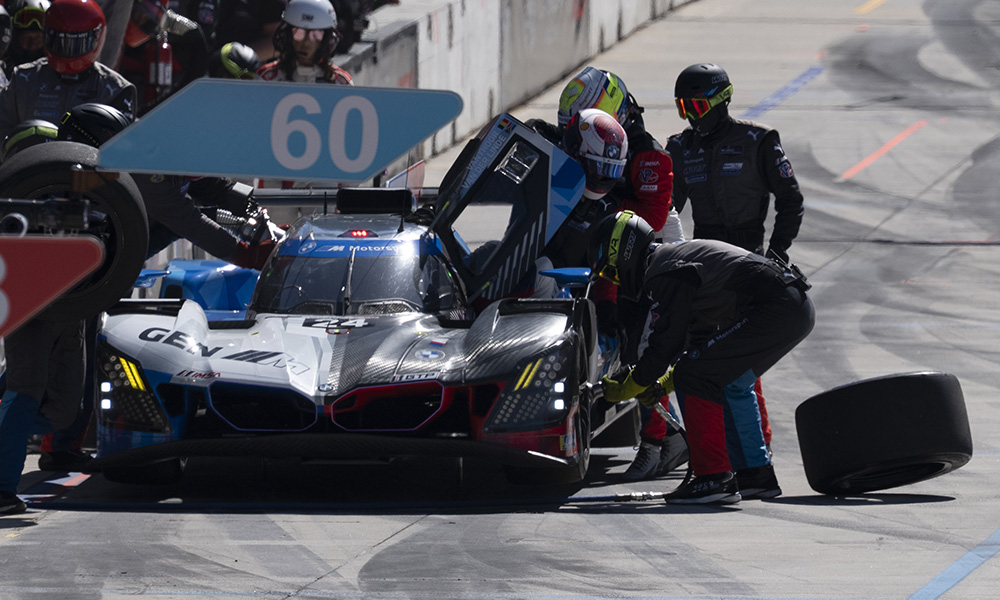
Photo: Michelin
The IMSA Experience
IMSA has also given WRT a different kind of classroom. The championship’s tracks bring bumps, elevation changes, old-school character and street circuits that ask different questions of the BMW M Hybrid V8 and its Michelin tires.
“I think the tracks are incredible, to be honest,” said Hardy. “I’d never been to a lot of these ones! Laguna was spectacular. I’m sure Watkins and Road America, Road Atlanta are as well.
“These are tracks that I’ve always personally wanted to go to. They’re really iconic racetracks. It definitely rewards brave drivers, strong setups.
“Whereas I think on the WEC side they’re a bit more F1 spec, so you’re able to run quite a similar set up across most of the circuits that we visit because they’re all very flat. They’re very normally high speed. And in IMSA, it’s quite a bit different. They’re bumpy.”
That contrast is part of the value. WEC gives WRT a deep understanding of the car and Michelin tire across global endurance races, while IMSA adds a different kind of test: rougher surfaces, iconic American circuits and a style of racing that demands adaptability.
Even with its recent podium momentum, WRT still views its first WeatherTech Championship season as a work in progress, one that is moving closer to a breakthrough. The lessons are coming from both sides of the program, and Watkins Glen is the next place to apply them.
“We’re still not completely there,” said Hardy. “We’re still a brand-new team, but I think we are getting better event by event and hopefully we can put everything together and get the long-awaited victory at Watkins.”



Intercontinental GT Challenge
STM Mercedes-AMG First Confirmed Bathurst 12H Entry


FIA WEC
Barcelona Thursday Notebook

GT World Challenge Europe
Dempsey, Andrade Opt Against Double Duty at Portimao

WeatherTech Championship
Joint IMSA-SRO Daytona BoP Test Canceled


Intercontinental GT Challenge
ABT Extends Lamborghini Partnership, Temerario to N24

WeatherTech Championship
All Four Corvette Factory Drivers Return to Pratt Miller in 2027

Pirelli GT4 America
Filgueiras: “Hard to Imagine” Career Without Cayman GT4 RS

McLaren Trophy America
Watch Full-Length Replays of Final Rounds at Indy

Toyota GR Cup NA
Watch Full-Length Replays of Rounds 13 & 14 at Indy


Pirelli GT4 America
Watch the Full-Length Replays of Rounds 12 & 13 at Indy